
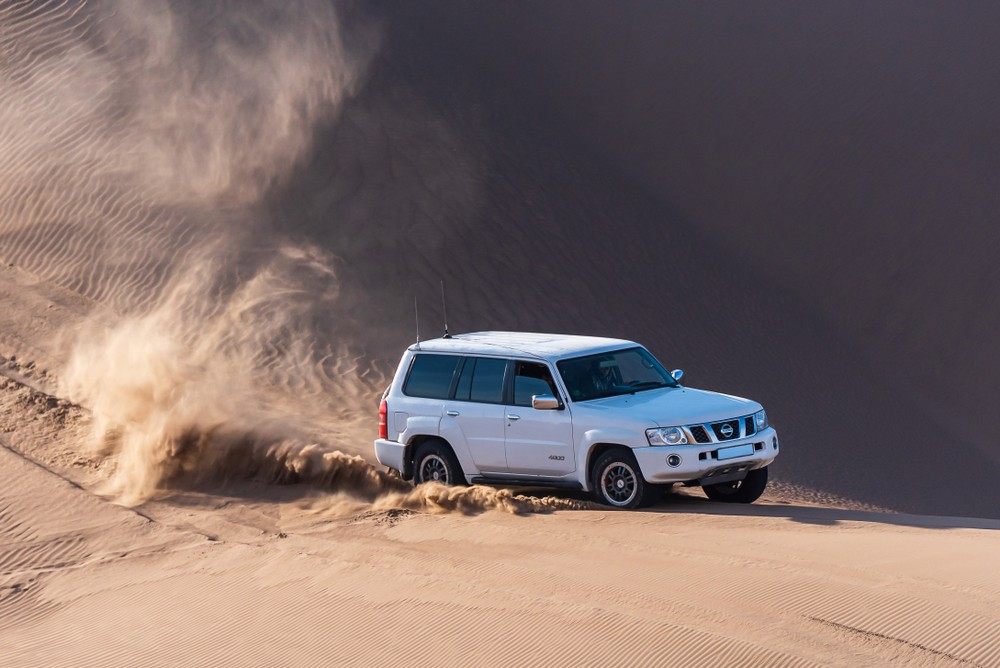
Why the Nissan Patrol Became a UAE Car Culture Icon
How the Nissan Patrol became part of UAE car culture through desert capability, Y61 tuning, NISMO, Liwa and seven generations of history.

Some cars become popular because they suit a market. A smaller group becomes part of the market’s identity. The Nissan Patrol in the UAE has become a defining part of local car culture.
Its place in Emirati motoring culture cannot be explained by one engine, one generation or one advertising campaign. The Patrol has spent decades moving between roles: utility 4×4, desert vehicle, family SUV, luxury flagship, tuning platform and performance model. Different generations of UAE drivers have known different Patrols, yet the badge has remained familiar.
The chronology is important. Nissan introduced the first Patrol, the 4W60, in Japan in 1951. Nissan says the model reached the Middle East in 1957. The UAE itself was established in 1971, meaning the Patrol’s regional history predates the federation by more than a decade.
That long presence gave the Patrol something newer SUVs cannot acquire quickly: generations of accumulated familiarity.
The Patrol Did Not Begin as a Luxury SUV
The first Nissan Patrol had little in common with today’s large, leather-lined family SUV.
The 1951 4W60 was conceived as a utility-focused four-wheel-drive vehicle. Its successor, the Patrol 60 Series, arrived in 1960 and remained in production for roughly two decades. Nissan’s heritage archive describes a straightforward ladder-frame design with rigid axles and selectable four-wheel drive, offered in several body configurations.
That simplicity mattered in the Middle East.
Early Patrols were arriving in a region where paved-road networks, cities and transport infrastructure were still developing rapidly. The vehicle’s ability to operate away from conventional roads gave it a practical purpose before status or luxury became part of the Patrol image.
The UAE’s own development accelerated dramatically after federation in 1971, supported by major investment in roads and infrastructure. The Patrol therefore did not simply arrive after the modern UAE had been built; its regional story overlapped with that transformation.
That long connection helped lay the foundations of Nissan Patrol UAE car culture, giving older generations a significance that goes beyond specifications alone.
How Seven Generations Changed the Patrol’s Role
The clearest way to understand Nissan Patrol history in the UAE is to look at what each major generation added.
| Era | What Changed | Why It Mattered in the Gulf |
|---|---|---|
| (1951) First Patrol | Utility-focused 4WD origins | Established the rugged formula |
| (1960) Patrol 60 Series | Long-running ladder-frame off-roader | Built a reputation around simple, durable 4WD hardware |
| (1980) third generation | Five doors, seven seats and air conditioning | Made the Patrol more relevant to families and hot climates |
| (1987) fourth generation | Coil-spring suspension and greater refinement | Improved comfort without abandoning off-road ability |
| (1997) fifth generation / Y61 | More comfort, stronger regional enthusiast identity | Became deeply associated with desert driving and modification |
| (2010) sixth generation / Y62 | Major move towards premium full-size SUV territory | Expanded the Patrol from desert tool to luxury family flagship |
| (2024) seventh generation / Y63 | Twin-turbo V6, new technology and premium cabin | Modernised the formula while retaining regional positioning |
Nissan dates the third generation to 1980 and says the addition of a five-door layout, seven-seat capability and air conditioning broadened its family appeal, particularly in warmer climates. The fourth generation followed in 1987 with coil-spring suspension, power steering and higher levels of refinement. The fifth generation arrived in 1997 as owners increasingly expected luxury alongside off-road performance.
The important point is that the Patrol did not suddenly transform from an agricultural-style 4×4 into a luxury SUV. Nissan added comfort gradually while protecting the capability on which the name had been built.
The Y61 Turned the Patrol Into an Enthusiast Car
For UAE car culture specifically, the Nissan Patrol Y61 in the UAE deserves its own chapter.
The fifth-generation model arrived in 1997, but its regional life stretched far beyond a normal model cycle. Even after the Y62 became the mainstream modern Patrol, demand for the older formula remained strong enough for Nissan to continue developing and selling versions aimed at Middle Eastern customers.
That produced models such as the Patrol Super Safari. Nissan introduced the regional Super Safari in 2016 and subsequently returned a three-door version to the Middle Eastern line-up in response to customer interest.
The 4.8-litre TB48 engine became central to that reputation. One detail is worth clearing up because it is frequently misstated online: the TB48 is an inline-six, not a V8. Nissan rated the regional 4.8-litre Super Safari at 280 hp and 451 Nm.
Among UAE enthusiasts, TB48-powered Y61 models are often informally referred to as “VTC” Patrols, a nickname associated with the engine’s valve-timing system.
More importantly, the Y61 developed an identity beyond Nissan’s factory specification. Modified Patrols became familiar at workshops, desert gatherings and performance events. Owners changed suspension, wheels, tyres, engine hardware and forced-induction setups, producing a separate tuning culture around a vehicle originally designed as a traditional 4×4.
ArabWheels has covered that story in much greater technical detail in its guide to the Nissan Patrol Y61’s UAE history and TB48 culture.
The Y61’s longevity also created something unusual: old and new interpretations of the Patrol existed simultaneously. One buyer could choose an old-school Super Safari for desert use while another selected a much more luxurious Y62 for daily family transport.
That widened the Patrol community instead of replacing one group of buyers with another.
The Y62 Made the Patrol a Luxury SUV Without Erasing Its Desert Image
The sixth-generation Y62 arrived in 2010, with its global debut held in the Middle East — an early indication of how important Gulf customers had become to the model.
The Y62 was a major change.
Its cabin, ride comfort, technology and overall positioning moved the Patrol closer to the premium full-size SUV category. In the UAE, that allowed the same badge to serve several very different uses: school runs, business travel, inter-emirate motorway journeys, family road trips and desert excursions.
The Y62 also made the Patrol’s road presence part of its appeal. Its size and high seating position worked in a market already comfortable with large SUVs, while the interior gave families considerably more comfort than earlier generations.
Yet Nissan did not abandon the enthusiast side.
In 2015, the company introduced the first Patrol NISMO, developed specifically for the Middle East. That is significant because it demonstrates that Nissan was no longer merely adapting a global SUV for Gulf customers; it was creating Patrol derivatives around regional preferences.
The modern Patrol consequently occupied a space between traditional off-roader and prestige SUV that few vehicles could match as convincingly.
The Patrol vs Land Cruiser Rivalry Strengthened Both Icons
It is difficult to discuss Nissan Patrol UAE car culture without mentioning the Toyota Land Cruiser.
The rivalry is not simply about horsepower or which SUV climbs a dune faster. Both nameplates have decades of regional history, large owner communities and strong reputations for handling demanding conditions.

That rivalry itself became part of Gulf car culture.
Some families have long preferred Toyota; others identify strongly with Nissan. Desert drivers debate generations, engines, tyre setups and modifications. Modern buyers compare technology, interior comfort, performance and resale.
There does not need to be an objective winner for the rivalry to matter. In cultural terms, having a credible long-term rival helped define the Patrol’s identity.
For the modern comparison, ArabWheels has a full Toyota Land Cruiser vs Nissan Patrol UAE comparison.
Why Desert Capability Matters Even to Owners Who Rarely Leave the Road
Not every Nissan Patrol in Dubai or Abu Dhabi spends weekends climbing dunes, but its off-road reputation still shapes how the SUV is viewed.
For many owners, the Patrol’s appeal comes from combining everyday family use with genuine desert capability. Even when most journeys are on paved roads, its association with camping, Liwa, long-distance travel, and dune driving remains part of the model’s identity.
The UAE’s geography gave that reputation somewhere real to develop.
Deep sand places very different demands on a vehicle than ordinary road driving. Ground clearance, four-wheel-drive systems, low-speed control, cooling, suspension travel, and tyre selection all become important.
Decades of Nissan Patrol desert driving in the UAE helped build that credibility rather than relying on off-road styling alone. That history remains central to the Nissan Patrol’s off-road reputation in the UAE.
Community discussions reflect that distinction. UAE owners often describe the Patrol as a vehicle that can handle family duties during the week while retaining genuine desert capability for weekend trips. Enthusiast conversations around the Y61, in particular, frequently focus on off-road use, modification, and mechanical simplicity.
These community views are anecdotal rather than technical evidence, but they help explain how owners themselves talk about the vehicle.
Liwa Shows Where Patrol Culture Still Lives
The connection between the Nissan Patrol and Liwa reflects decades of UAE off-road culture and desert driving.

At the 2025 Liwa Festival, Nissan created its first Dar Patrol, or “Home of Patrol”, at the foot of Tal Moreeb. More interestingly, Nissan displayed concepts based on three generations, the Y61, Y62 and Y63, rather than presenting only its newest product.
That says something important about Patrol culture.
For most vehicles, the manufacturer wants attention focused firmly on the latest generation. With the Patrol, older models remain commercially and culturally useful because owners do not necessarily view them as obsolete.
A Y61, Y62 and Y63 represent different ideas of what a Patrol should be.
The Y61 is closely tied to old-school mechanical character and modification. The Y62 represents the V8-era luxury Patrol familiar across UAE roads for more than a decade. The Y63 carries the name into the twin-turbo and connected-technology era.
They compete for affection more than they replace one another.
What About the Famous 4,000-Vehicle Gulf War Story?
This is where some accounts of Nissan Patrol history in the UAE need more careful handling.
A widely repeated version says that, during Iraq’s 1990 invasion of Kuwait, Al Masaood supplied around 4,000 Nissan Patrols to support the UAE military and that the gesture helped create long-term loyalty to the model.
There is a verifiable historical foundation, but the details are often exaggerated.
The National reported that the UAE government asked automotive dealerships for 4,000 vehicles during the 1990 Kuwait crisis and that Abdullah Mohamed Al Masaood agreed to provide the vehicles free of charge.
However, the report does not confirm that all 4,000 vehicles were Nissan Patrols, or even that most of them were Patrols.
Several later articles and social-media posts make that additional claim, but ArabWheels should not repeat it as fact without a primary record identifying the models supplied.
That distinction matters because the documented history is already significant without adding unsupported details. The connection between Al Masaood, Nissan, Abu Dhabi, and the country’s automotive history is substantial. Al Masaood’s own history records the introduction of Datsun vehicles to Abu Dhabi in 1972 and a formal Nissan distribution agreement in 1984.
From Family Car to Status Symbol
Prestige also played a role, but the Patrol’s status works differently from that of a conventional luxury car.
A European luxury SUV may signal price, brand or exclusivity. The Patrol adds a layer of regional familiarity.
For some owners, its status comes from combining premium positioning with everyday practicality. It offers enough cabin space for family duties, enough refinement for long journeys and enough off-road credibility to retain an adventurous identity.
That combination also broadens its appeal.
A stock family-owned Patrol, a modified Y61, a NISMO and a desert-prepared Super Safari can look very different, yet all remain recognisably part of the same Patrol community.
That flexibility is one reason the model has remained relevant even as buyer tastes and SUV trends have changed.
Tuning Made the Patrol Part of Performance Culture Too
The Patrol’s cultural reach extends beyond traditional off-roading.
The TB48-powered Y61 became a popular platform for modification, helping shape Nissan Patrol tuning culture in the UAE. NISMO later gave performance-focused Patrol buyers a factory-built alternative.
This crossover is visible in UAE performance culture, where modified Patrols can appear alongside sports cars in conversations about horsepower and straight-line performance.
ArabWheels explores that broader scene in its guide to roll racing and modified-car culture in the UAE.
That does not mean every modified Patrol is built for racing. Desert setups and high-output road builds can have completely different goals. It does mean the Patrol has developed an enthusiast ecosystem far beyond its original utility mission.
Any substantial engine or chassis modification must also comply with UAE approval requirements, making legal compliance and engineering quality important considerations for modified vehicles.
Disclaimer: This article discusses Nissan Patrol tuning, desert driving and performance culture in the UAE for editorial and historical context. ArabWheels does not encourage unsafe driving or illegal vehicle modifications. Any modifications and off-road or performance driving should comply with applicable UAE laws and approved safety requirements.
Nissan Learned to Build Patrols for the Middle East, Not Just Sell Them Here
One of the strongest explanations for the Patrol’s longevity is that Nissan treated Middle Eastern demand as product-development input.
The Super Safari was retained for regional customers. The first Patrol NISMO was developed specifically for the Middle East. The seventh generation made its global debut in Abu Dhabi in September 2024. Nissan later launched the new Patrol NISMO with 495 hp and 700 Nm, again tailored to Middle Eastern customers.
The latest Patrol PRO-4X takes the line in another direction, with off-road-focused equipment including all-terrain tyres and underbody protection.
Instead of asking one Patrol to satisfy every owner, Nissan now effectively divides the identity into different branches: mainstream luxury, serious adventure and high-performance NISMO.
That product strategy reflects how broad the Patrol audience has become.
The V8 Disappeared, but the Patrol Did Not
The seventh-generation Patrol also marked a major cultural shift for Nissan in the UAE.
The outgoing Y62 had become closely associated with V8 power. Replacing it with a twin-turbo V6 risked making the new Patrol feel less familiar to long-time enthusiasts.
Instead, Nissan paired the smaller engine with higher output.
The current 3.5-litre twin-turbo V6 produces 425 hp and 700 Nm, compared with the outgoing V8’s lower peak output and torque. Nissan also offers a naturally aspirated 3.8-litre V6 producing 316 hp and 386 Nm in the latest generation.
For UAE buyers, that transition illustrates a larger point: the Patrol’s identity was never tied permanently to one engine.
The TB48 inline-six, Y62 V8 and Y63 twin-turbo V6 belong to different eras, but each has contributed to Nissan Patrol UAE car culture through a shared formula of size, capability, family usefulness and regional presence.
Readers comparing current variants can check the latest Nissan Patrol UAE prices and specifications on ArabWheels.
Its Popularity Is Still Measurable
Cultural importance can be difficult to quantify, but current market behaviour shows that interest in the Nissan Patrol in the UAE extends well beyond nostalgia.
In the first quarter of 2025, market data compiled by BestSellingCarsBlog placed the Patrol at the top of the UAE model rankings, although the Toyota Hilux moved ahead by the first half of the year.
Nissan separately reported that the new-generation Patrol recorded more than 50% year-on-year sales growth during the first half of FY25 across its reporting scope.
The story continued in 2026. ArabWheels’ analysis of industry registration estimates for April 2026 found the Patrol leading the UAE market even though its own registrations had fallen sharply during a wider market contraction. That result was notable because it reflected relative resilience and an established buyer base rather than a simple sales boom.
You can read that analysis in How Nissan Patrol Won Despite UAE Market’s 41.9% Plunge.
ArabWheels’ own search data provides another signal: the Patrol generated 63,440 searches in one monthly ranking published in September 2026, more than the next two models combined.
Sales rankings change from month to month. Cultural recognition tends to move more slowly.
Why Is the Nissan Patrol So Popular in the UAE?
The simplest answer is that the Patrol has had enough time to become useful in several different ways.
Its early reputation came from utility and off-road ability, helping lay the foundation for Nissan Patrol UAE car culture. Later generations added family space and comfort. The Y61 created an enthusiast and tuning legacy, while the Y62 pushed the Patrol deeper into premium-SUV territory. NISMO added factory performance, and the Y63 introduced a new engine generation without abandoning the size, four-wheel-drive capability, and road presence UAE buyers already recognised.
No single one of those qualities explains the car.
Together, they do.
Why the Patrol Is a Car-Culture Icon, Not Simply a Best-Seller
Best-selling vehicles come and go.
A cultural icon survives periods when it is not number one.
That is the more meaningful distinction with the Nissan Patrol in the UAE. Its influence extends beyond showroom rankings to the continued popularity of older generations, the language owners use around Y61 and VTC models, the aftermarket supporting them, the Land Cruiser rivalry, its presence at Liwa, and Nissan’s willingness to develop Middle East-specific Patrol variants. Together, these elements have helped shape Nissan Patrol UAE car culture over several decades.
Even the seventh generation’s world premiere took place not in Japan, Europe, or North America, but in Abu Dhabi. Nissan explicitly described the Middle East’s emotional connection with the vehicle as one of the reasons for choosing the region.
More than seven decades after the first Patrol appeared, that is probably the clearest indication of how far the relationship has travelled.
The UAE did not invent the Nissan Patrol. But generations of owners, families, desert drivers and enthusiasts helped turn it into something distinctly local.
Explore more ArabWheels stories on Nissan Patrol UAE car culture, Patrol history, off-road driving and the latest SUV buying guides in the UAE.
