
UAE Used-Car Prices Rise 0.6% as Market Stabilises
September data shows firmer asking prices, softer same-model-year values and a used-car market that appears increasingly stable.

UAE used-car asking prices edged higher in September 2026, but the latest market data points to gradual stabilisation rather than another sharp increase in vehicle values.
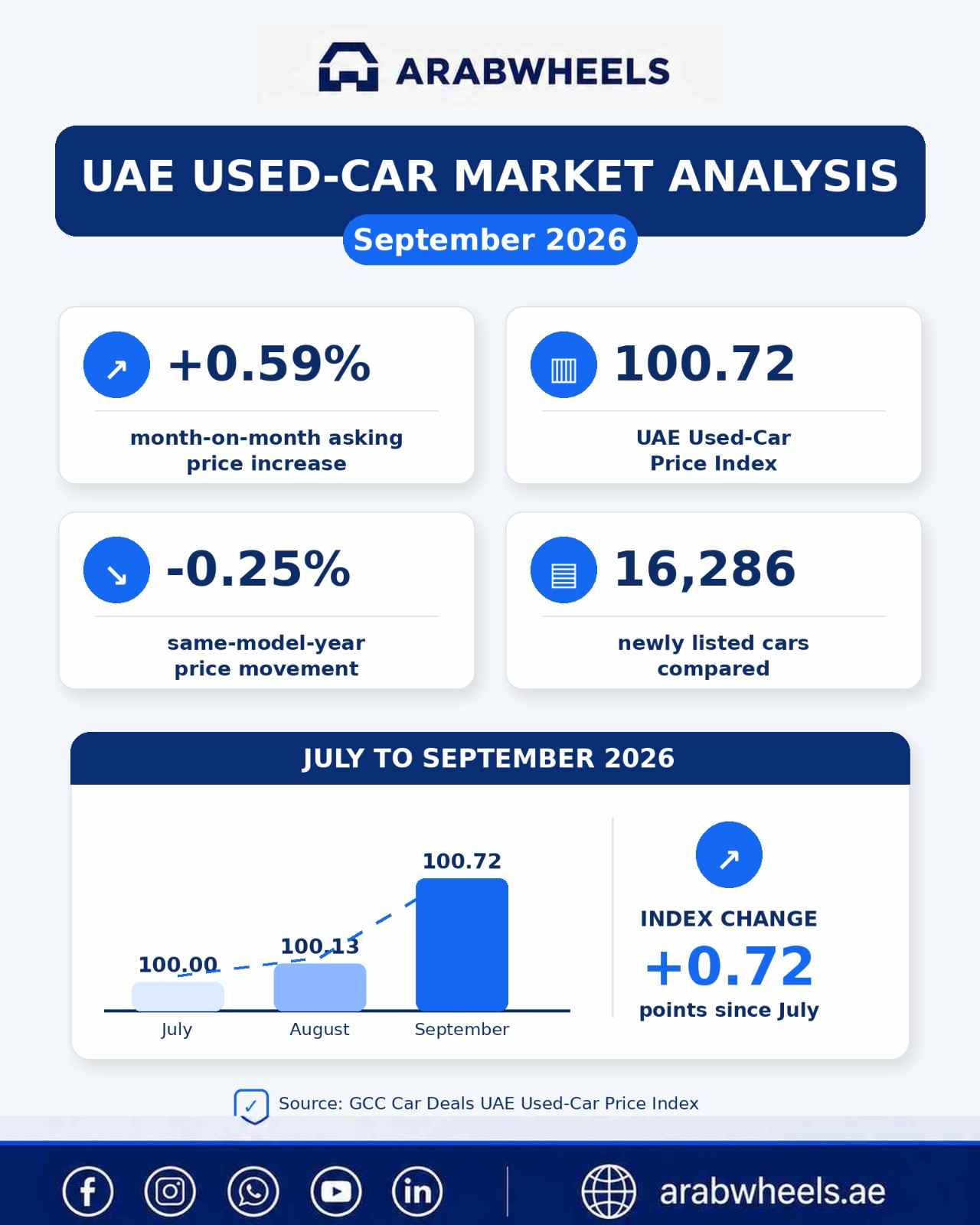
The latest GCC Car Deals Used-Car Price Index shows that UAE used car prices rose 0.59% month on month in September, taking the index to 100.72 from its July 2026 base of 100. The estimate carries a 90% range of +0.22% to +0.97%.
However, buyers should not assume every second-hand car became more expensive. When GCC Car Deals compared the same model years without allowing for the extra month of vehicle age, asking prices actually fell 0.25%.
Together, those figures point to a relatively firm market where normal depreciation and room for negotiation remain.
A Small September Rise, Not a Used-Car Price Surge
| Metric | September 2026 |
|---|---|
| Like-for-like asking price change | +0.59% |
| 90% estimated range | +0.22% to +0.97% |
| Used-car price index | 100.72 |
| July 2026 base | 100.00 |
| Same-model-year movement | -0.25% |
| Newly listed cars compared | 16,286 |
| August monthly change | +0.13% |
September followed a smaller 0.13% increase than August. As a result, the index moved from 100 in July to 100.72 by the end of September. The change is measurable, but it remains modest.
What Does the 0.59% Price Increase Actually Mean?
The index does not simply calculate the average asking price of every used car advertised in the UAE.
Instead, GCC Car Deals compares newly listed cars on a like-for-like basis. Vehicles are matched using marketplace, make, model, model year, and trim. The methodology also adjusts for mileage and the extra month of age between comparison periods.
That distinction matters. If one month contains more luxury SUVs and sports cars than the previous month, a simple average could suggest that asking prices had risen even if comparable models had barely changed in value.
Matching similar cars reduces that distortion.
The September dataset included 16,286 newly listed cars, compared with 16,752 in August. Importantly, the index measures advertised asking prices rather than completed sale prices, so buyers may still negotiate a lower final price.
Why Did Same-Model-Year Prices Fall 0.25%?
At first, a 0.59% market increase and a 0.25% decline can look contradictory. However, they measure different things.
The main index adjusts for the fact that cars become one month older between reporting periods. The same-model-year calculation removes that ageing allowance and shows how asking prices moved when comparing the same model years directly.
Therefore, the adjusted index looks slightly stronger after accounting for age, mileage and vehicle mix. Meanwhile, buyers comparing cars from the same model year may still notice some downward price movement.
That is also why a market-wide index should not replace research on the specific car someone plans to buy.
UAE Used-Car Market Trends: Are Prices Stabilising?
The September data supports the idea that the UAE used-car market is becoming more stable, although there is not enough history yet to call it a long-term trend.
The GCC Car Deals index only began in July 2026 and has not yet been adjusted for seasonal changes.
The early pattern is:
- July 2026: Index starts at 100
- August 2026: Prices rise 0.13%
- September 2026: Prices rise 0.59%
- September index level: 100.72
So far, the headline adjusted index has avoided a meaningful month-on-month decline. Still, a rise of less than 1% since July is not a price boom. It is better viewed as evidence that asking prices are holding relatively firm.
The next several monthly readings will give buyers a clearer picture of UAE automotive market trends than September alone.
Imported Used Cars Still Shape the UAE Market
The UAE does not operate like a closed used-car market. Imported vehicles and re-export activity play an important role, particularly through Dubai.
Reuters reported that the UAE was Japan’s largest destination for used-car exports in 2025, receiving about 224,000 vehicles, equal to roughly 15% of Japan’s total used-car export volume. Dubai also serves as a redistribution point for vehicles heading to other Middle Eastern and African markets.
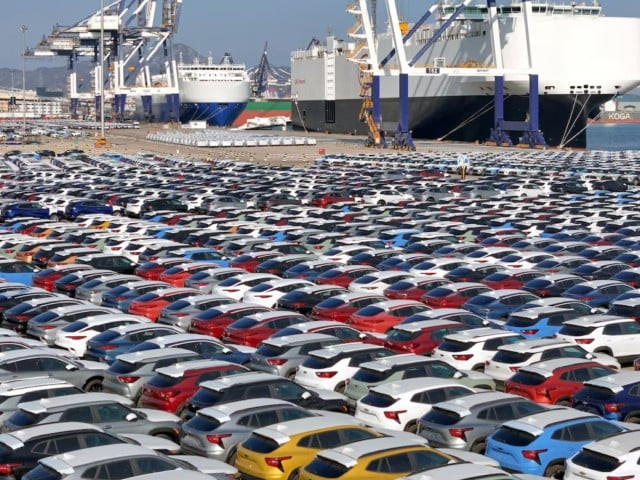
Reuters also reported how disruption to shipping routes affected vehicles destined for Dubai earlier in 2026. That highlights how international logistics can influence the supply of imported cars entering the UAE.
However, the available data does not show that imported-car supply caused September’s 0.59% increase. Exchange rates, overseas auction prices, shipping costs and local demand can all affect supply, but the price index does not identify one specific reason for the monthly movement.
Used EV Prices in the UAE Tell a Different Story
The wider market may be firming, but used electric vehicles are following a more complicated path.
Auto Trader UAE reported growing interest in used EVs priced below AED 150,000 during May 2026, particularly among buyers considering sedans and crossovers for city use. At the same time, it found more price flexibility on older and higher-mileage electric vehicles.
Demand and resale value are therefore not moving in the same direction.
Battery condition is also becoming more important. Auto Trader reported that cars with remaining battery and drivetrain warranty, documented service history and clearer battery information tended to attract greater buyer confidence.
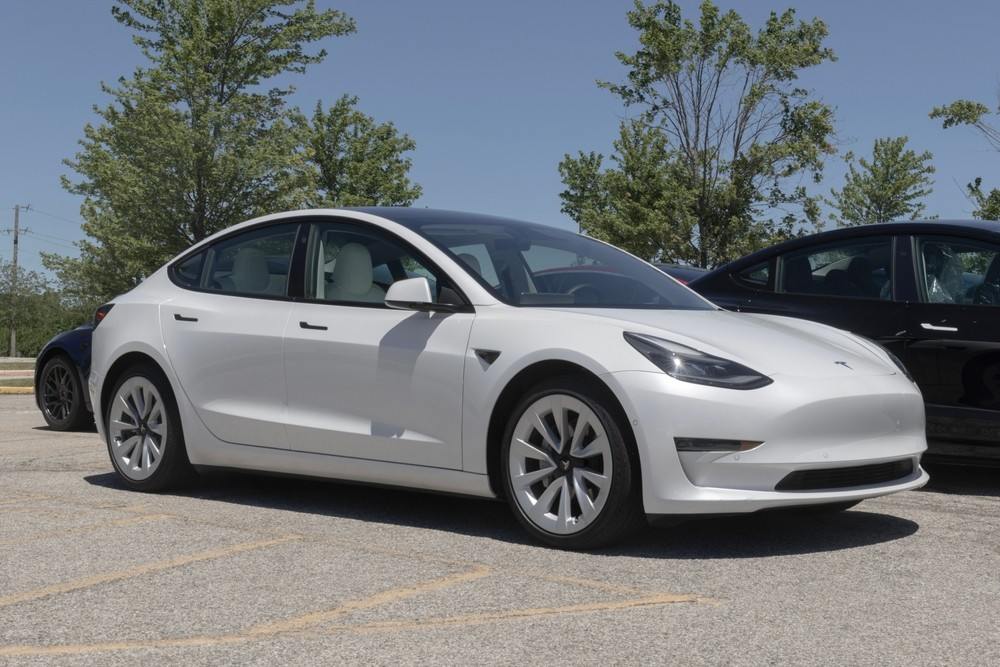
Models attracting attention included the Tesla Model 3, Tesla Model Y, Hyundai Ioniq 5, Nissan Leaf, BMW iX and BMW i4. Meanwhile, established petrol SUVs such as the Toyota Prado and Nissan Patrol continued to attract family and off-road buyers.
For anyone considering an EV, battery condition, warranty coverage, and charging needs remain important when buying an electric car in the UAE.
Rising electric vehicle adoption in the UAE should therefore not automatically be interpreted as rising used-EV values.
What Affects Car Depreciation in the UAE?
Market averages only tell part of the story. Individual cars can lose value at very different rates.
Several factors affecting car depreciation matter when comparing used cars in the UAE:
- Model and trim: Popular versions can attract stronger demand than less desirable specifications.
- Vehicle age: Older cars normally lose value even when the wider market remains stable.
- Mileage: Two cars from the same model year can carry very different asking prices because of kilometres travelled.
- GCC specification: Buyers often distinguish between GCC-spec and imported vehicles.
- Service history: Complete maintenance records can improve buyer confidence.
- Accident history: Previous damage can significantly affect resale value.
- Warranty: Remaining manufacturer or dealer warranty can support a stronger asking price.
- Condition: Interior, paint, tyres, and mechanical condition still influence value.
- EV battery health: Battery state of health and remaining battery warranty can affect used-EV demand.
The 0.59% market movement should therefore provide context rather than act as a valuation for an individual car.
For Buyers, the Right Car Matters More Than 0.59%
A 0.59% monthly increase should not change a buying decision on its own.
Someone shopping for used cars for sale in the UAE should compare several examples of the same model, trim, and model year before deciding whether a listing represents good value.
Mileage, GCC specification, service history, accident history, warranty and overall condition can create a much larger price difference than September’s market movement.
Buyers should also remember that the index tracks asking prices rather than completed transactions, so there may still be room for negotiation.
EV buyers need additional checks. Battery health, remaining battery warranty and charging performance can affect both ownership costs and resale value.
Sellers Still Need to Price for the Car, Not the Index
September’s figures give sellers some reassurance because they do not show broad asking prices collapsing.
However, sellers should not use the headline increase as justification for sharply raising their price. The 0.25% decline for the same model years shows that normal depreciation remains present.
A realistic asking price, complete service record, clean condition, and clear ownership history can matter more than a small movement in the overall index.
EV sellers have another consideration. Providing battery-health information and details of remaining warranty coverage can help buyers judge a car more confidently, particularly as more older EVs reach the second-hand market.
Buy Now or Wait? September’s Data Gives No Clear Advantage
There is no single best month for every buyer.
The current data does not show a rapidly falling market that clearly rewards waiting. Equally, the 0.59% increase is too small to suggest buyers should rush into a purchase because prices are about to surge.
A better approach is to judge the individual deal.
If a buyer finds the right model with good service history, sensible mileage, clean accident history and a competitive price, waiting purely for a broad market decline may not deliver a meaningful saving.
Buyers with no immediate need can continue monitoring listings, particularly if they are flexible about model, trim or powertrain.
Will UAE Used-Car Prices Keep Rising?
September’s increase carries some statistical weight because the reported 90% range of +0.22% to +0.97% remains above zero. However, the index is still very new.
More monthly data is needed before calling this a sustained upward cycle.
If prices keep rising through several reporting periods while listing volumes remain relatively steady, there would be stronger evidence that the market has entered a period of gradual price growth. If later readings reverse September’s increase, the latest movement may simply represent short-term variation.
September does not signal a used-car price boom, nor does it suggest buyers should wait for a major correction. For now, the market looks relatively steady. That puts more importance on finding the right car at the right price than trying to predict the next small movement in the index.
What do you think of the latest UAE used-car price movement? Are prices stabilising, or are buyers still seeing better deals on individual models? Share your thoughts in the comments. Keep following the ArabWheels Blog for more UAE used-car market updates, resale-value insights, EV ownership guides, and car-buying advice.
