
From the 1981 Dubai Grand Prix to Today: UAE Motorsport
How a one-off street race in Deira grew into Dubai Autodrome, Yas Marina and a year-round UAE motorsport scene.

Stirling Moss and Nigel Mansell once competed on a temporary circuit in Deira, while Juan Manuel Fangio also completed demonstration laps in a Mercedes-Benz W196. This happened long before Dubai Autodrome existed and almost three decades before Formula 1 arrived at Yas Marina. That unusual December weekend in 1981 remains an important chapter in UAE motorsport history.
The 1981 event did not lead to an immediate racing series. Over time, the UAE developed permanent circuits, international championships, karting and endurance racing, along with a Formula 1 season finale watched around the world.
The important detail, however, is that the 1981 Dubai Grand Prix was not an official Formula 1 World Championship race. It was a multi-category motorsport event featuring sports cars, celebrity races, and Formula 1 demonstrations.
When Deira Became a Race Track
On December 4, 1981, roads near the then-new Hyatt Regency looked very different from the busy streets drivers know today.
The 2.6km temporary circuit used roads around the Hyatt Regency area, including sections of what are now Corniche Road and Al Khaleej Road. The event formed part of celebrations marking the UAE’s 10th anniversary.
The list of drivers was unusually strong for a one-off exhibition event.
Five-time Formula 1 world champion Juan Manuel Fangio was there. So were Stirling Moss, Jack Brabham, John Surtees and Denny Hulme. Contemporary F1 drivers including Nigel Mansell, John Watson and Keke Rosberg also travelled to Dubai.
“It was a fun thing. There was nothing serious about it.” — Stirling Moss, recalling the 1981 Dubai Grand Prix in The National
Yet this was not a conventional Grand Prix weekend. Spectators saw sports-car racing, Formula 1 demonstrations, saloon cars and even a celebrity Citroën CX race.
One Weekend, Then a Long Wait
The 1981 race did not become an annual Dubai Grand Prix.
For years, it remained an unusual piece of local motoring history rather than the start of an immediate international racing series.
Still, organised motorsport in the UAE had deeper roots. The Emirates Motorsports Organization traces its history to 1965, and EMSO is the UAE’s sole representative to the FIA, FIM and CIK. EMSO says it governs approximately 140 competitive events on the UAE motorsport calendar, spanning circuit racing, rallying, drag racing, motocross and other disciplines.
The calendar now covers a wide range of disciplines, showing that motorsport in the Emirates extends well beyond a single headline race or competition category.
Dubai Finally Gets a Permanent Circuit
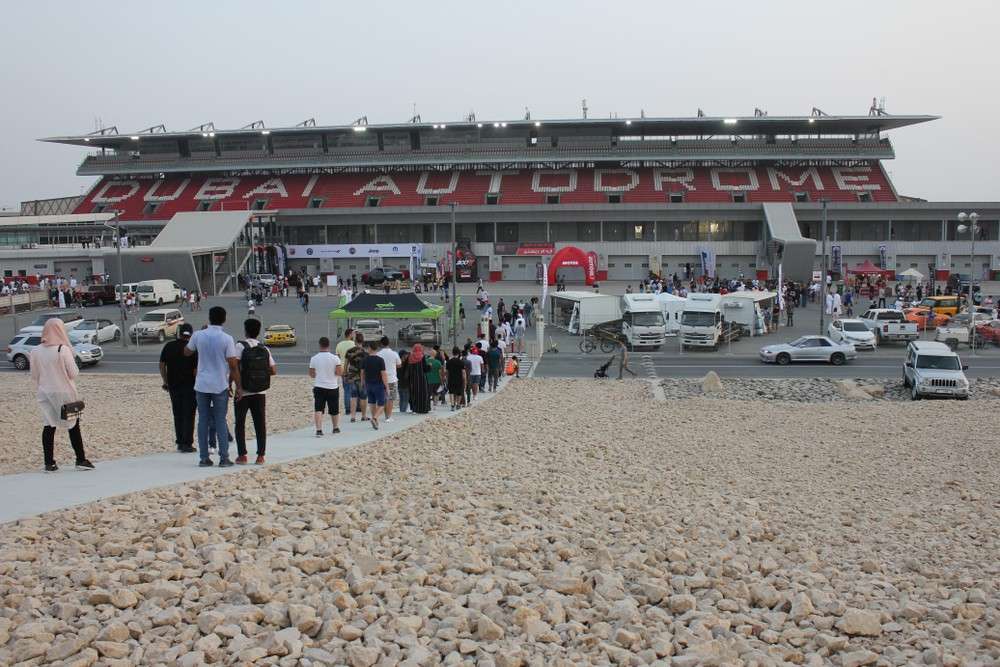
Permanent circuit racing arrived in Dubai in 2004 with the completion of Dubai Autodrome.
Dubai Autodrome opened in MotorCity as the UAE’s first fully integrated multipurpose motorsport facility. Unlike the temporary Deira course, the Autodrome established a permanent FIA-sanctioned circuit in Dubai.
The 5.39km track can operate in six configurations. Around it sit karting tracks, a race school, paddock areas and facilities capable of hosting both local and international competition.
The permanent venue also expanded opportunities for local drivers.
Track days gave road-car owners controlled access to a circuit. Karting provided a more accessible route into organised competition. International series could also race at a purpose-built venue rather than on temporary public-road layouts.
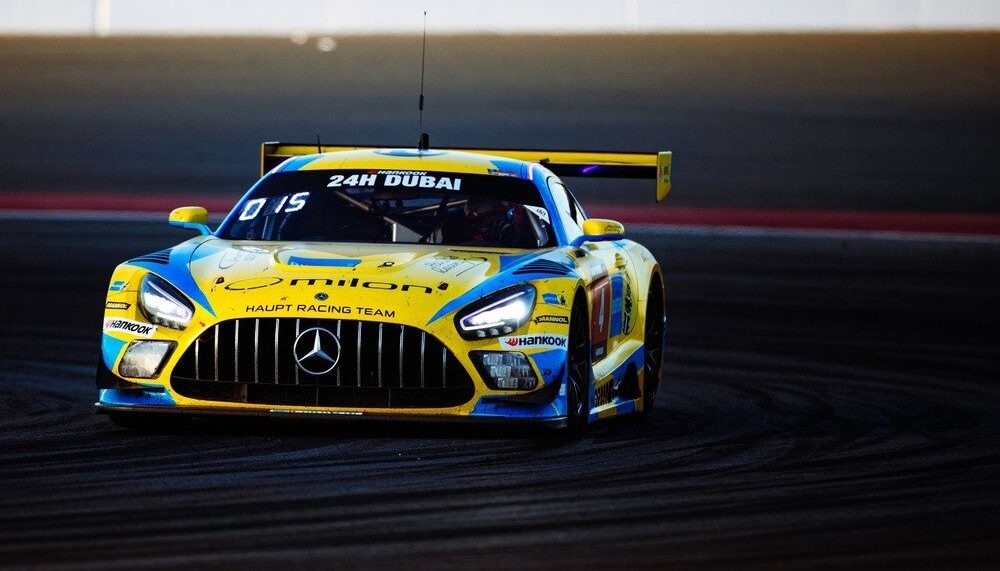
Dubai Autodrome has since hosted categories ranging from GT racing to touring cars and endurance competition.
Read more: The UAE’s Hottest Automotive Events of 2024
Old Racing Cars Return to Dubai
The connection to 1981 did not disappear when modern racing arrived.
The Historic Dubai Grand Prix Revival brought classic Formula 1, Le Mans and sports-racing machinery to Dubai Autodrome decades later.
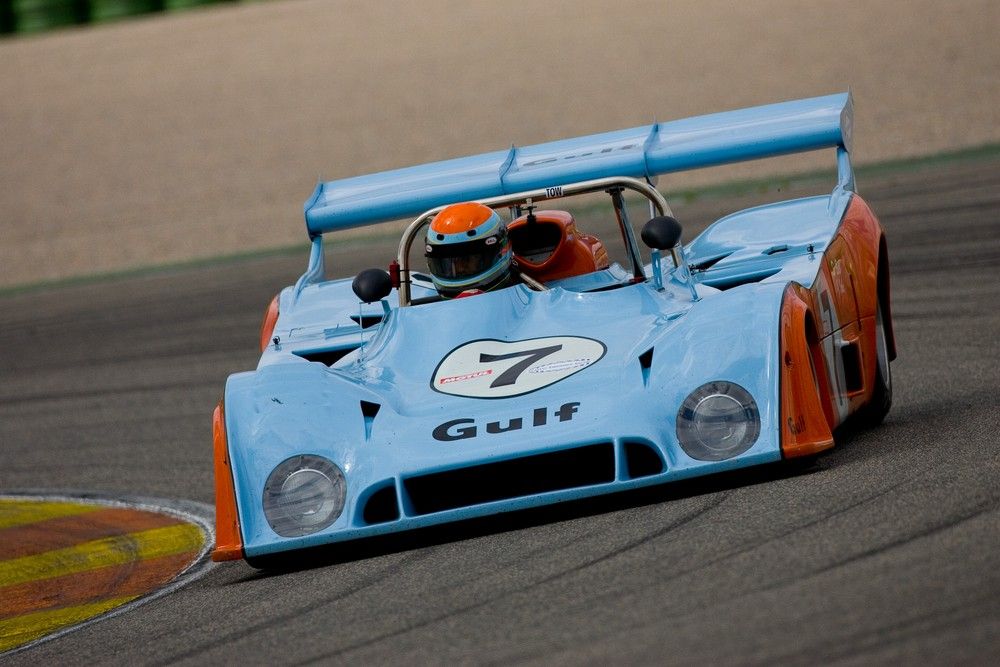
Organisers explicitly linked the revival to the 1981 event and said enthusiasm for circuit racing in the Middle East had been growing.
“Everything at the HDGPR is turned towards the public, which is something that’s missing from 80% of racing events.” — Romain Dumas, two-time 24 Hours of Le Mans winner, via Racecar
Dumas’s point highlights another change since 1981: modern race weekends increasingly bring spectators closer to the cars and drivers.
Historic machinery now sits alongside contemporary championships, track days and karting as part of a much broader UAE motorsport scene.
Then Formula 1 Arrived in Abu Dhabi
Yas Marina Circuit added a Formula 1 World Championship round to the UAE’s motorsport calendar in 2009.
The circuit opened in 2009 and hosted the first Abu Dhabi Formula 1 Grand Prix that November. Sebastian Vettel won the inaugural race for Red Bull, ahead of teammate Mark Webber.
Unlike the 1981 Dubai event, this was an official Formula 1 World Championship round.
The inaugural race established Yas Marina’s day-to-night format. Cars started in daylight before finishing beneath the floodlights as evening fell, creating Formula 1’s first day-to-night Grand Prix.

The inaugural race closed the 2009 season, and Yas Marina has hosted the Formula 1 season finale every year since 2014. Yas Marina is also scheduled to host the 2026 season finale.
Motorsport Is No Longer Just a Spectator Sport
Formula 1 raised the UAE’s international profile, but participation has also broadened considerably.
A young driver can start in karting. An enthusiast can take a road car to an organised track day. Amateur competitors can enter regulated championships, while professional teams can race at FIA-standard venues.
Meanwhile, the national motorsport calendar now covers circuit racing, rallying, motocross and drag racing. EMSO says its national calendar contains approximately 140 competitive events across multiple disciplines.
Motorsport activity in the country now takes place year-round rather than being limited to major international race weekends.
Circuit racing, karting, rallies and other disciplines now form part of a year-round national calendar.
Final Verdict: From Temporary Roads to Permanent Racing
The 1981 Dubai Grand Prix stands in sharp contrast to today’s permanent racing infrastructure across the Emirates.
A temporary circuit beside the Hyatt Regency brought together some of the greatest racing drivers of their generation for what was essentially a one-off celebration.
More than four decades later, the UAE has permanent race circuits and a far broader competition calendar.
Dubai has a permanent racing complex. Abu Dhabi has an established Formula 1 venue. Karting, endurance racing, rallies and local championships fill the calendar between the headline international events.
UAE motorsport history therefore extends well beyond Formula 1’s arrival in 2009.
The sport has evolved from a memorable weekend on closed roads into something drivers and fans can experience year-round.
Stay ahead with ArabWheels for more Formula 1, motorsport and automotive stories from across the Emirates.
