

Will UAE Fuel Prices Rise in April Despite the Recent Oil Crash?
UAE Fuel Prices are currently under intense scrutiny. April prices face upward pressure as the “Hormuz Spike” averages out despite recent crude retreats. Motorists in the Emirates should prepare for a potential “April hangover” from the recent geopolitical storm.
Global oil markets experienced a dramatic 9% crash over the last 24 hours. However, the math of the UAE fuel pricing mechanism remains challenging. The peak-panic prices of early March will likely push retail rates higher next month.
Current Fuel Prices
The UAE Fuel Price Committee announced the following retail rates for March 2026:
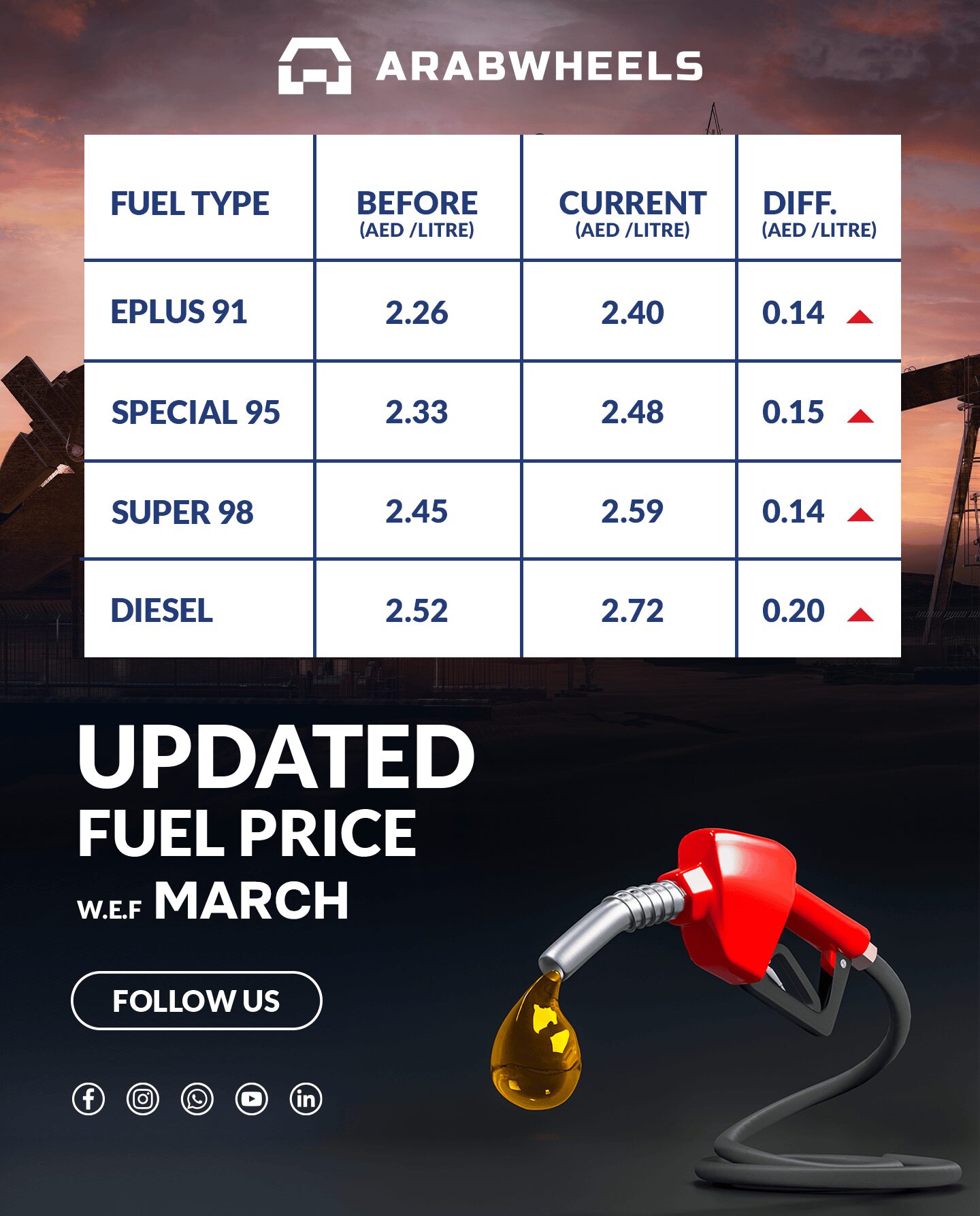
The current UAE Fuel Prices are up by nearly AED 0.15 compared to February.
Global Market Snapshot
The energy market is currently defined by extreme volatility. Brent crude spiked to nearly $120 per barrel earlier this month. This “war premium” emerged from escalating tensions in the Strait of Hormuz. This critical waterway carries roughly 20% of the world’s daily oil supply.
As of today, Brent prices have plummeted to approximately $89.80 per barrel. This sharp drop followed reports of possible US military intervention to secure shipping lanes. Despite this crash, the average price for March remains elevated. The average for February was much lower, sitting near $73 per barrel.
Local and Regional Drivers
OPEC+ recently held a virtual meeting on March 1, 2026. The group decided to boost production by 206,000 barrels per day for April. The UAE will contribute an additional 18,000 barrels per day to this total.
This production increase aims to stabilize global markets amid regional conflict. However, analysts suggest this volume is too small to change the supply balance. Domestic refining costs also play a role in the monthly price setting.
Regional refinery throughputs dropped slightly in early 2026 due to seasonal maintenance cycles. This reduction in local output can significantly impact the calculation of April Fuel Prices in the UAE.
What Could Push Prices Up
The primary driver for an April increase is the “lagged averaging” system. The UAE sets prices based on the average oil cost from the preceding month. In March 2026, there was an unprecedented price spike to $119.50 per barrel.
Even with the recent retreat to $90, the monthly average is still rising. Traders are also factoring in higher insurance costs for oil shipments. War-risk premiums for vessels in the Gulf have increased by up to 100%. These added logistical costs eventually trickle down to the petrol pump.
What Could Push Prices Down
Strong forces are working to prevent a massive hike in April. The International Energy Agency recently proposed a record emergency reserve release. This plan involves releasing 300-400 million barrels of oil.
Such a move would be the largest coordinated drawdown of the stockpile in history. Additionally, US crude production remains near record highs at 13.6 million barrels per day. If the Strait of Hormuz remains open, the speculative “air” in prices will vanish. A fast normalization of shipping flows is the main downside risk for crude.
What We Predict
Based on current data, a moderate increase of AED 0.10 to AED 0.18 is likely for April. The high prices from the first 10 days of March have already baked in an increase. The recent price crash came too late to offset that earlier peak fully.
We estimate a 75% probability of an increase across all fuel grades. There is a 20% chance that prices will remain unchanged if crude stays below $85 this week. A price decrease is highly unlikely given the current March average. Motorists should expect Super 98 to move closer to the AED 2.75 range.
Key Uncertainties
The biggest variable is the status of the Strait of Hormuz. Any further attacks on tankers would immediately send Brent back above $100. Conversely, a formal G-7 agreement on stockpile releases would cause another price plunge.
Global demand also remains a “wildcard” for the 2nd quarter of 2026. The IEA has revised demand growth lower due to high prices and economic uncertainty. If Chinese demand continues to soften, it could counteract the geopolitical risk premium. We will know the final decision when the Committee meets on March 31.
Conclusion
The UAE fuel market is currently caught between local stability and global chaos. While the recent drop in crude is encouraging, the March average is still mathematically high. Drivers should budget for a modest hike in April.
However, the massive IEA intervention could limit the long-term damage to our wallets. What are your views on this situation? Let us know in the comments below. Keep following the Arabwheels Blog for more content like this.