
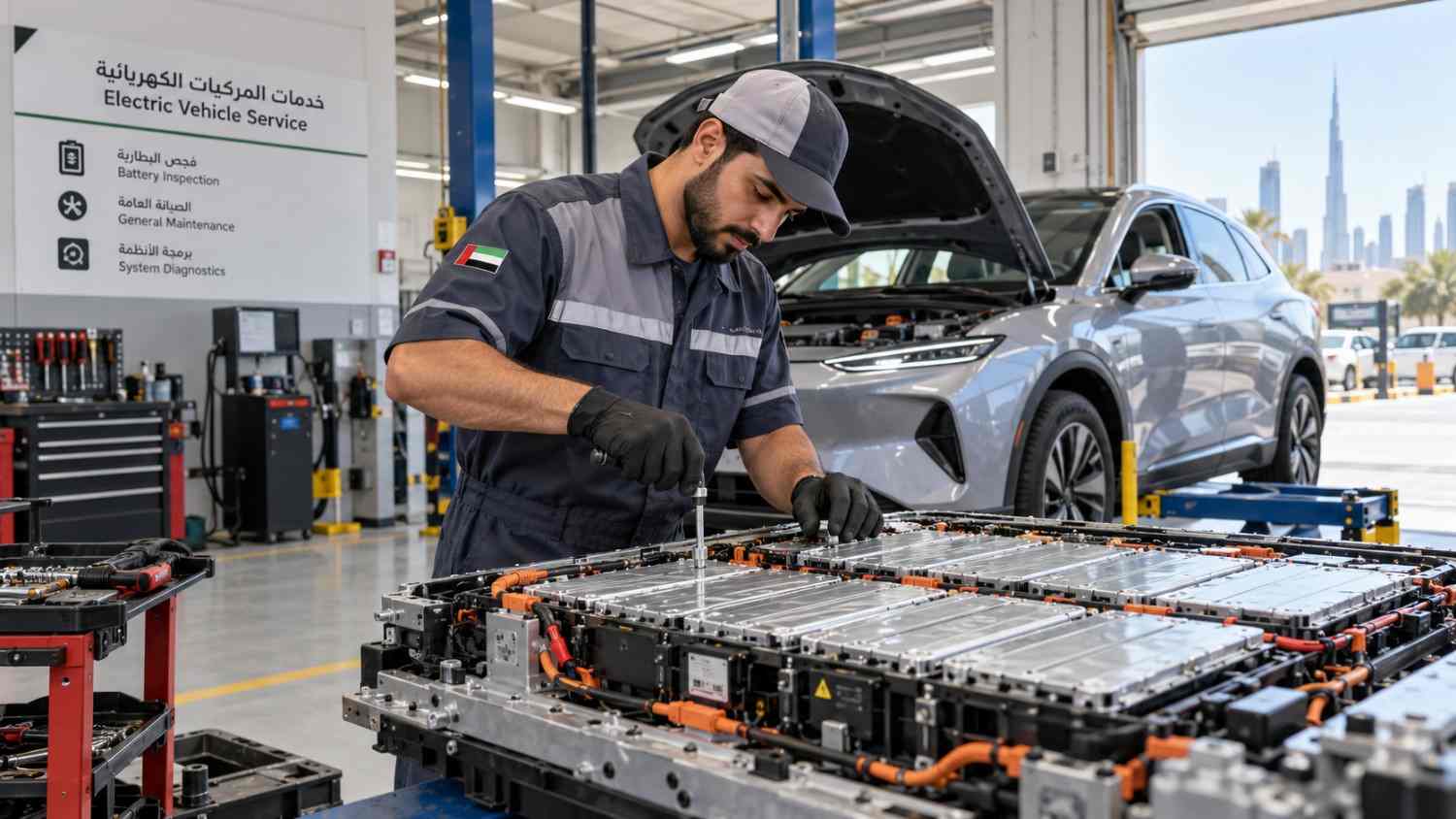
Sodium-Ion Batteries: Could They Make EVs Cheaper?
How sodium-ion batteries compare with lithium-ion on cost, range, charging, safety and future EV use in the UAE.

At a UAE EV showroom, the conversation around sodium-ion batteries usually comes back to three questions: How far will the car go, how quickly will it charge, and why does it cost this much?
Battery chemistry rarely gets the same attention, even though it increasingly shapes all three answers.
After decades in laboratories and small-scale projects, the technology is moving closer to commercial production and attracting fresh investment from major battery makers and automakers.
The appeal is easy to understand. Sodium is widely available, some cell designs reduce dependence on lithium, and manufacturers see potential to lower material costs as production scales.
However, EV battery technology still involves trade-offs. Leading lithium-ion batteries offer higher energy density, while mature LFP batteries remain difficult to beat on cost today. That means newer chemistries are more likely to expand the options available for affordable EVs, commercial vehicles and energy storage than replace established battery types outright.
For buyers comparing today’s market, ArabWheels already lists a broad selection of electric cars available in the UAE. Explore electric cars in the UAE. Sodium-ion technology could eventually widen that choice further at the more affordable end of the market.
Four Decades in the Lab, Now the Production Push Begins
Sodium-ion battery technology is not new.
Sodium-ion battery research dates back to the early 1980s. In 1981, researchers Claude Delmas, Jean-Jacques Braconnier, Claude Fouassier and Paul Hagenmuller demonstrated reversible sodium movement in a battery cathode material. Lithium-ion technology reached commercial products much sooner, while sodium-ion remained largely a research technology for decades.
The first sodium-ion-powered electric car appeared in China in late 2023. Even in 2025, global sodium-ion battery production remained below 1 per cent of lithium-ion production.
That gap is now beginning to narrow.
One major sodium-ion production project broke ground in Xuzhou, China, in January 2024 with a planned annual capacity of 30 GWh. The project brings together BYD’s battery unit FinDreams and Huaihai Holding Group.
A statement describing the partnership said the companies aim to:
“Jointly create the world’s largest supplier of sodium battery systems for micro vehicles.”
Elsewhere, second-generation sodium-ion technology has reached GWh-level industrialisation, with full-scale mass production planned by the end of 2026.
That does not put sodium-ion on equal footing with lithium-ion, but it moves the discussion well beyond laboratory prototypes.
The Battery Works in a Familiar Way
A sodium-ion battery works on broadly the same principle as the lithium-ion battery found in most electric vehicles.
Inside each cell are a positive electrode (cathode), a negative electrode (anode), and an electrolyte. During charging and discharging, ions move between the electrodes while electrons travel through an external circuit.
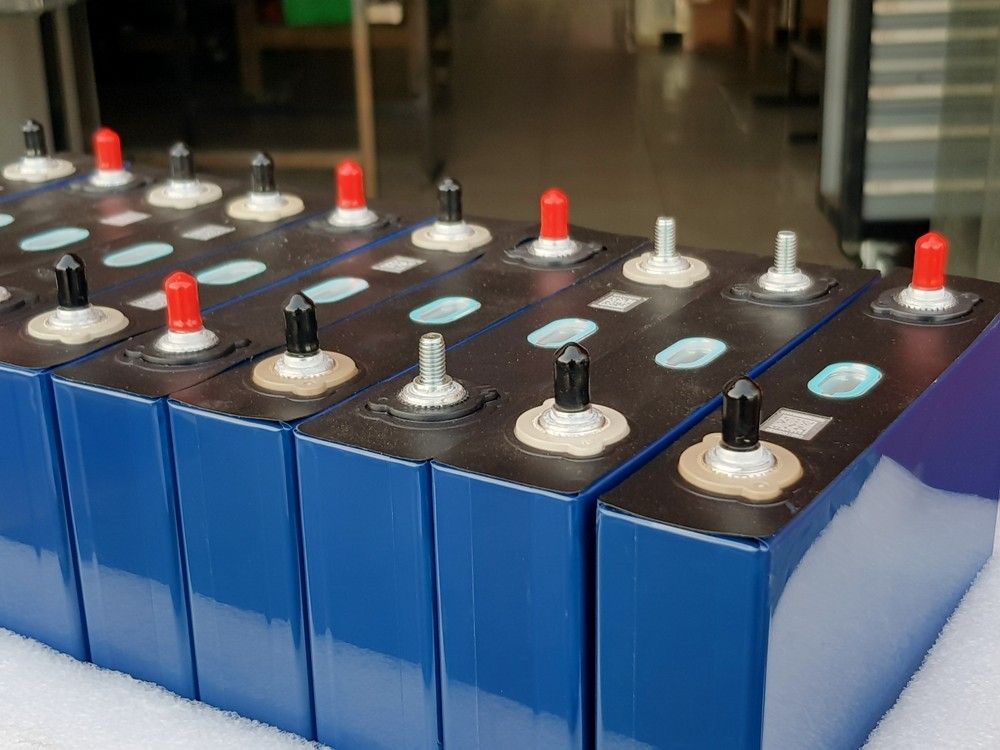
The main difference is the ion carrying the charge.
Sodium-ion batteries differ from lithium-ion technology mainly in the ions that carry the charge.
That seemingly small change affects which materials manufacturers can use, how much energy a battery can store and, ultimately, which types of electric vehicles it suits best.
Sodium ions are larger and heavier than lithium ions. As a result, today’s sodium-ion cells generally need more mass or volume to store the same amount of energy.
Why Sodium-Ion Battery Cost Is More Complicated Than Cheap Salt
Sodium’s abundance is the obvious cost advantage, but it is not the whole story.
Some sodium-ion cell designs can use aluminium current collectors on both electrodes. Conventional lithium-ion cells generally use aluminium on the cathode side and copper on the anode side.
Most commercial sodium-ion designs also use hard carbon rather than the graphite common in lithium-ion anodes.
Together, those material changes can reduce exposure to lithium, graphite, and copper costs.
However, manufacturing scale matters just as much as raw-material prices.
Lithium-ion factories, suppliers, and production processes have spent years becoming more efficient. Sodium-ion manufacturing has not yet reached the same scale or developed an equally mature supply chain.
That is why a cheaper raw material does not automatically result in a cheaper finished EV battery.
Could Sodium-Ion Batteries Really Make EVs Cheaper?
Potentially, yes- but not in every application today.
Current lithium prices are generally not high enough for the technology to undercut LFP battery costs in most applications. LFP production is already highly optimised and benefits from an enormous global supply chain.
That could change.
Sodium-ion battery cost may fall as manufacturers increase production, improve hard-carbon supply and raise cell energy density. The chemistry could also become more attractive if lithium prices rise sharply again.
For large battery producers, the ability to manufacture different chemistries can also reduce exposure to swings in lithium prices.
For buyers, the key point is simpler:
The technology could eventually help make EVs cheaper, but it does not guarantee a lower showroom price today.
That distinction matters most to buyers comparing affordable electric cars under AED 200,000 in the UAE. See electric cars under AED 200,000 in the UAE.
Sodium-Ion vs Lithium-Ion: Energy Density Is the Big Trade-Off
Battery energy density remains sodium-ion’s biggest technical disadvantage.
Energy density measures how much energy a battery can store relative to its weight. In an electric vehicle, higher energy density makes it easier to offer more driving range without fitting an excessively large or heavy battery pack.
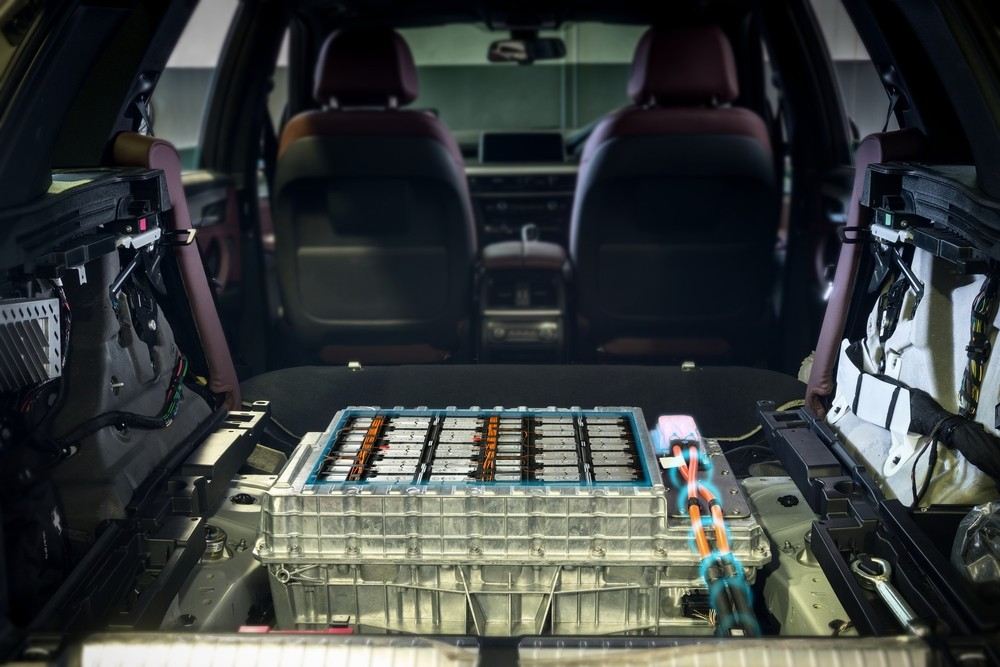
The latest sodium-ion cells can reach around 175 Wh/kg. Newer LFP cells can reach approximately 205 Wh/kg, while NMC lithium-ion cells can reach around 265 Wh/kg.
| Battery Chemistry | Cell Energy Density, Up To | Main Advantage | Main Limitation |
|---|---|---|---|
| Sodium-ion | Around 175 Wh/kg | Material diversity and cold-weather performance | Lower energy density |
| LFP lithium-ion | Around 205 Wh/kg | Cost, durability and mature production | Lower density than NMC |
| NMC lithium-ion | Around 265 Wh/kg | Higher energy density | Greater material and supply-chain exposure |
These are cell-level figures, not direct vehicle-range comparisons.
Battery-pack design, aerodynamics, vehicle weight, motor efficiency, temperature, and software all influence how far an electric car travels.
For a compact commuter EV, the difference may be manageable.
For a premium electric SUV designed for long motorway journeys, every kilogram and litre of battery space matters more.
Hard Carbon Solves One Problem and Creates Another
The larger sodium ion also affects the materials inside the battery.
Conventional graphite does not accommodate sodium in the same way it accommodates lithium, so hard carbon has become the leading anode material for commercial sodium-ion cells.
That solves one technical problem but creates another supply-chain challenge.
Hard-carbon production remains far less developed than the established graphite industry and is still heavily concentrated in China.
Manufacturers are also developing different sodium-ion cathode chemistries, each with its own balance of energy density, cost, cycle life and critical-mineral use.
For an EV buyer, remembering every chemistry name is unnecessary.
What matters is that “sodium-ion battery” does not refer to one fixed design. Different sodium-ion chemistries could eventually serve different vehicle types, just as LFP and NMC do today.
A 400 km Sodium-Ion EV Changes the Conversation
One of the clearest signs of progress came in February 2026, when a passenger vehicle equipped with Naxtra sodium-ion cells was introduced in China.
The cells are rated at up to 175 Wh/kg, while the complete system is claimed to support more than 400 km of electric driving range.
There is an important qualification.
The announcement does not identify the 400 km figure as WLTP or EPA range. It should therefore be treated as a manufacturer-stated figure, not compared directly with WLTP-certified EVs sold in the UAE or Europe.
Longer future sodium-ion applications have also been discussed, but those figures remain development targets rather than specifications buyers should assume from every sodium-ion electric car.
The wider point is more important than one range number: sodium-ion technology is moving from experimental vehicles towards practical passenger-car applications.
Cold Weather Is the Headline Strength: UAE Heat Is the Better Question
Cold-weather performance is one of the technology’s strongest advantages.
The latest cells can retain around 90 per cent of nominal capacity at -40°C and operate at temperatures as high as approximately 70°C.
That gives the chemistry a clear attraction in countries where severe winters can reduce EV battery range and power delivery.
The UAE presents the opposite challenge.
Drivers in Dubai and Abu Dhabi are far more likely to encounter prolonged high temperatures than extreme cold. Summer heat puts significant demands on battery cooling, charging performance, and long-term degradation.
A cell’s stated ability to operate at 70°C does not prove that a complete sodium-ion EV will outperform an established lithium-ion model during a Gulf summer.
Battery thermal management, cooling hardware, software calibration and warranty coverage will remain crucial.
ArabWheels’ EV ownership guide for Dubai explains why charging access, battery condition and thermal management already matter to local electric-car buyers. Read the EV Ownership Guide for Dubai
Real-world GCC testing will ultimately tell UAE buyers more than an extreme-temperature laboratory figure alone.
Safety Looks Promising, but “Fireproof” Goes Too Far
Safety is another area attracting interest.
Naxtra has passed China’s GB 38031-2025 Electric Vehicles Traction Battery Safety Requirements, which cover thermal propagation, bottom-impact testing and fast-charging cycles. The updated standard took effect on 1 July 2026.
That is significant, but no EV battery should be judged by chemistry alone.
Cell separators, cooling, pack structure, crash protection, charging controls and battery-management software all affect what happens when a battery is damaged or overheated.
Claims that the chemistry is “fireproof” or “cannot catch fire” therefore go further than the available evidence supports.
A more accurate conclusion is that the technology shows promising safety characteristics, but complete vehicles still require recognised battery and crash testing.
Can Sodium-Ion Batteries Charge Faster?
Fast charging is another area drawing attention as the technology moves towards wider use.
Early sodium-ion developments demonstrated rapid charging under specific test conditions, but those figures should not be treated as a universal charging time for every future sodium-ion EV.
Real EV charging speed depends on battery size, voltage architecture, battery temperature, starting state of charge, charging curve, and the vehicle’s maximum DC charging rate.
For a future UAE-market sodium-ion electric car, the useful number will be the same one buyers should check on any EV:
How long does the battery take to charge from 10 to 80 per cent on DC power, and under what conditions was that time recorded?
Chemistry alone does not determine charging speed.
Lithium and Sodium Could End Up in the Same Car
The two chemistries do not need to compete for one to succeed.
One emerging approach combines different battery chemistries in the same system, allowing engineers to use each chemistry where it works best.
Higher-energy lithium-ion cells could support longer driving range, while sodium-ion cells could offer benefits in temperature performance, material availability and cost.
CATL China E-car Business CTO Gao Huan described this direction when discussing the company’s sodium-ion passenger-car programme:
“The arrival of sodium-ion technology marks the beginning of a dual-chemistry era.”
A battery-management system can coordinate the different cell groups as part of one complete pack.
That approach may prove far more realistic than expecting one battery chemistry to serve every type of electric vehicle.
Sodium Removes Lithium, Not Every Supply-Chain Risk
Sodium-ion batteries are often presented as a way to diversify EV battery supply chains.
That is only partly true.
Some sodium-ion chemistries can avoid lithium and graphite, but commercially relevant designs may still use other critical materials such as nickel, manganese or vanadium.
Manufacturing also remains heavily concentrated.
Nearly all existing sodium-ion battery manufacturing capacity is currently located in China. Based on installed and announced projects, China could account for more than 95 per cent of sodium-ion manufacturing capacity in 2030.
Sodium-ion technology could therefore diversify battery materials without immediately creating a more geographically diverse manufacturing base.
Those are two separate supply-chain issues.
Grid-Scale Energy Storage Could Help Sodium-Ion Grow Faster
Cars are only part of the sodium-ion story.
Grid-scale energy storage may prove one of the chemistry’s most natural early applications because a stationary battery does not need to carry its own weight down a motorway.
Lower energy density therefore matters far less.
Cost, lifespan, temperature performance, raw-material availability and the ability to manufacture batteries at scale become more important.
The technology is already moving towards larger stationary-storage applications, including multi-GWh supply agreements and commercial energy-storage systems.
That matters to the EV industry too.
If stationary storage creates much greater demand for sodium-ion cells, manufacturers can spread research, factory, and component costs across greater production volumes.
It does not guarantee cheaper electric cars, but the technology still lacks manufacturing scale.
Short-Range EVs Could Benefit Before Luxury Cars Do
Sodium-ion batteries make the strongest case where maximum energy density is not the main priority.
Likely applications include:
- Affordable city EVs
- Compact electric cars
- Light commercial vehicles
- Delivery fleets
- Electric two- and three-wheelers
- Forklifts and industrial vehicles
- Buses operating predictable routes
- Stationary energy-storage systems
These are also broadly the applications where current technical assessments see the strongest near-term potential for the chemistry.
A delivery van returning to the same depot each evening does not necessarily need 700 km of driving range.
Neither does every urban commuter.
If a sodium-ion battery can provide enough range for the job while helping reduce overall vehicle cost, its lower energy density becomes a more acceptable trade-off.
Long-Range EVs Still Give Lithium-Ion a Clear Role
Long-range vehicles still favour lithium-ion chemistry because higher-energy NMC cells can store more energy without dramatically increasing pack size and weight.
LFP presents a different challenge at the affordable end of the market. It is relatively inexpensive, widely understood and already manufactured at enormous scale.
Current LFP technology still holds advantages in energy density, manufacturing maturity and cost at today’s lithium prices.
That means newer chemistries cannot succeed simply by being cheaper than premium nickel-rich cells. They also need to establish a clear advantage over LFP.
This keeps the meaning, removes the stuffing, and still covers lithium-ion, NMC and LFP naturally without repeating the primary keyword again.
What Should UAE Buyers Check on a Sodium-Ion EV?
A sodium-ion badge should not automatically make an electric car a better or worse purchase.
Those figures matter far more to an owner than the name of the ion moving through the cell.
For a broader ownership checklist, ArabWheels’ UAE Electric Cars 2026 guide covers battery health, charging access, warranties and service history. Read the UAE Electric Cars 2026 buyer guide
Should UAE Buyers Wait for a Sodium-Ion EV?
For most people, no.
Today’s lithium-ion electric cars already offer mature battery technology, established warranties, extensive manufacturing experience and a far wider choice of models.
Sodium-ion should be viewed as another option developing alongside lithium-ion, not a reason to treat today’s EVs as obsolete.
Its biggest opportunity may emerge at the lower end of the market.
If manufacturers can increase battery energy density, improve hard-carbon production and scale factories without losing the chemistry’s material advantages, sodium-ion batteries could help make practical electric cars more affordable.
That remains an “if”.
The technology still needs greater manufacturing scale, a more mature supply chain and more real-world passenger-car data.
Sodium-Ion Does Not Need to Replace Lithium to Matter
Battery development is often presented as a race in which one technology eventually wins.
Cars rarely work that neatly.
A compact commuter, an electric delivery van and a premium long-range SUV ask very different things from their batteries. The right chemistry depends on the job.
The International Energy Agency’s 2026 assessment puts sodium-ion’s position in useful perspective:
“Sodium-ion batteries are on course for commercial success, and 2026 could prove to be a pivotal year for the technology’s scaling efforts.”
That does not mean lithium-ion is disappearing.
It means manufacturers may gain another way to balance EV battery cost, driving range, temperature performance, and supply-chain risk.
For UAE buyers, sodium-ion becomes truly significant when those advantages stop being figures on a battery-company presentation and start showing up as a lower number on the showroom price tag.
For more UAE EV guides, battery technology explainers and electric car ownership advice, explore the ArabWheels UAE blog.
