
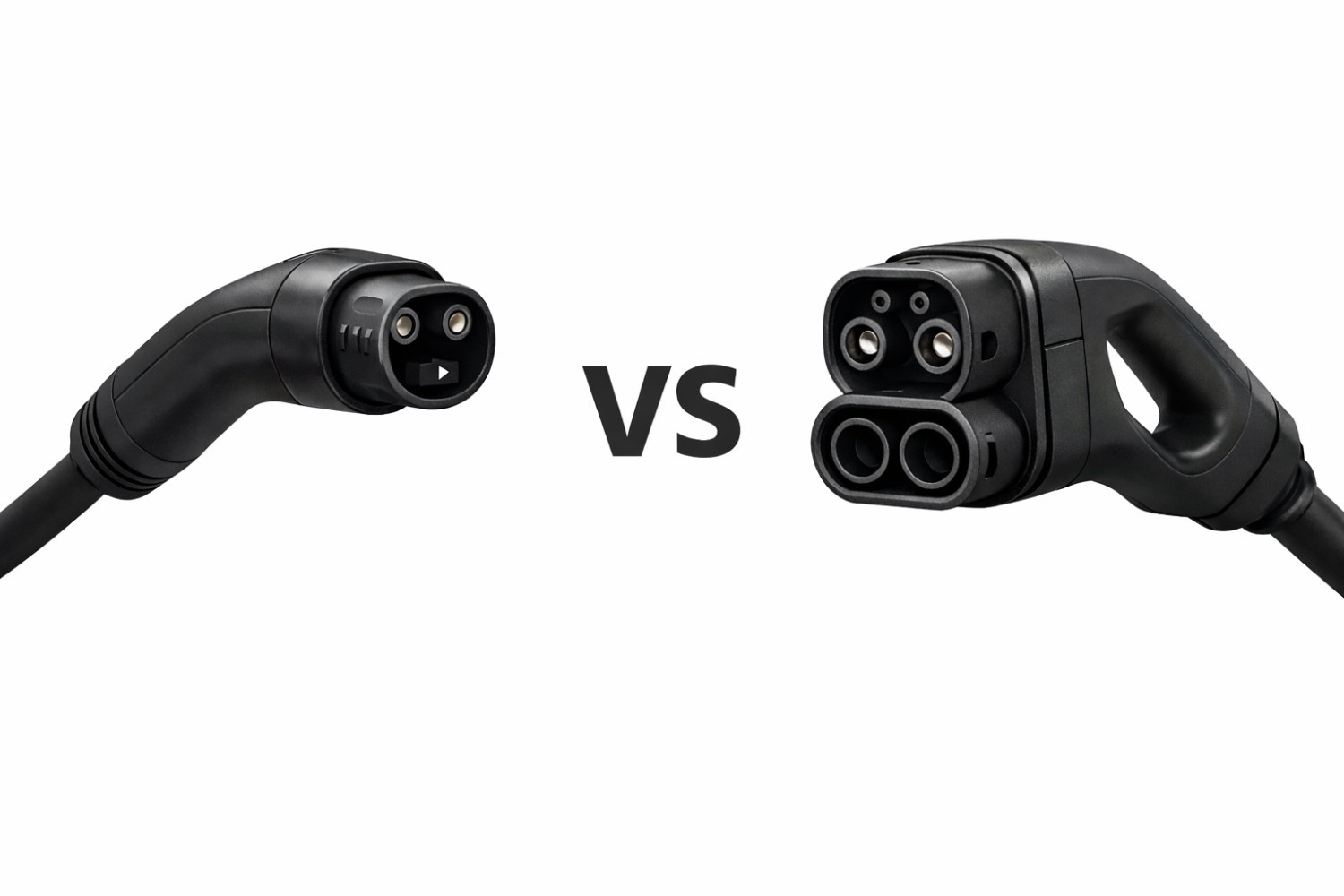
NACS vs CCS 2026: Which EV Charging Standard Will Win?
A practical UAE buyer’s guide to EV charging compatibility, adapters, and the real difference between NACS and CCS

The UAE EV market is growing quickly. Buyers now have more electric cars to choose from across a wider range of budgets, body styles and brands. But one question keeps showing up during the buying process: which charging standard actually makes more sense in the UAE? That is where the NACS vs CCS debate becomes relevant.
This is not really about which plug is winning the loudest online shouting match. It is about which charging setup best suits how people in the UAE actually buy, charge and live with electric vehicles.
That distinction matters. The UAE market includes officially sold EVs, imported US-spec cars, Teslas, and global models that follow different charging formats. So before choosing a car based on design, price, or range, it helps to understand how charging compatibility could affect ownership from day one. It is also worth looking at the Top electric cars to buy in the UAE to understand which models are officially available and how their charging setups differ.
What Are NACS and CCS?
NACS
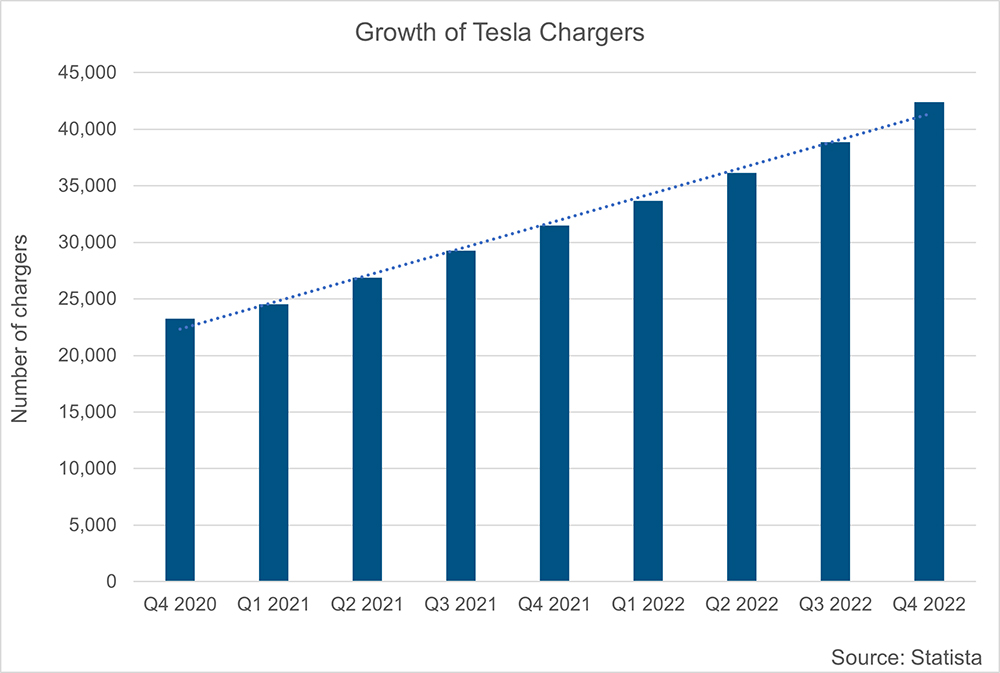
NACS stands for North American Charging Standard. Tesla developed this connector for its vehicles and charging network in North America. It later gained wider industry attention after several automakers announced plans to adopt it for the North American market.
NACS is known for its compact design, lighter weight and support for both AC and DC charging through a single connector.
CCS
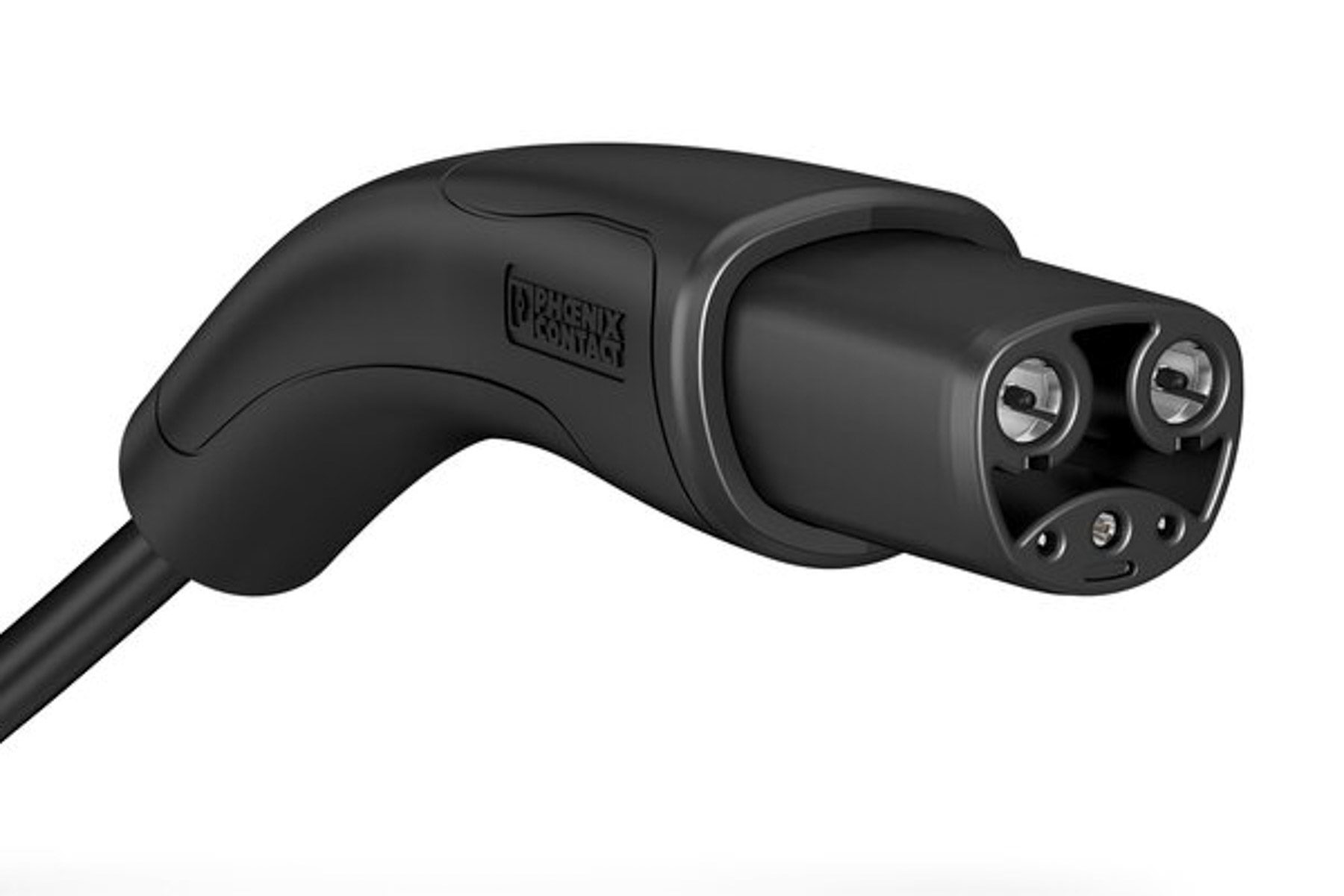
CCS stands for Combined Charging System. It is one of the most widely used EV charging standards globally and supports both AC and DC charging.
In practice, CCS comes in two main versions:
-
CCS1, used mainly in North America
-
CCS2 is used widely in Europe and many international markets
For UAE buyers, this distinction matters because many officially sold EVs in the region are based on global platforms that align more closely with CCS2 than with North American charging formats.
NACS vs CCS: Quick Comparison for UAE Buyers
| Feature | NACS | CCS |
|---|---|---|
| Main market strength | North America | Europe and many global markets |
| Connector design | Smaller and lighter | Larger and bulkier |
| AC and DC charging | Yes | Yes |
| UAE relevance | Stronger for Tesla and US imports | Stronger for many officially sold EVs |
| Adapter dependence | May matter outside native ecosystems | May matter for imports and some charging scenarios |
| Best suited for | Tesla buyers and US-spec imports | Mainstream UAE-spec and global-market EVs |
Why This Comparison Matters in the UAE
The UAE is not following the exact same EV path as the United States. That is where many buyers can get tripped up.
A charging standard that looks dominant in one region may not automatically be the easiest or most practical option here. In the UAE, the real question is not which connector looks better on paper, but which one creates less friction in daily ownership.
Imported EVs Can Complicate Things
Imported Teslas and used US-market EVs can look appealing, often because of pricing, availability, or model choice. But the charging setup can be one of the most overlooked parts of the purchase.
A car that seems like a bargain can quickly become inconvenient if it requires adapters, special charging checks, or limited public charging options. This is especially relevant in the UAE, where local charging habits and infrastructure may not always match the assumptions built into a US-market vehicle. Anyone considering that route should first read Imported cars in the UAE: what to check before buying, because charging compatibility is only one part of the ownership puzzle.
Daily Convenience Matters More Than Spec Sheet Drama
For most drivers, the real issue is simple: can the car charge easily at home, at work, at the mall, or on longer drives?
That is what should shape the decision in the NACS vs CCS discussion. The better standard is the one that makes ownership easier, not the one with the loudest online fan club.
Cost and Convenience Go Together
Charging standards are not just about the physical plug. They also affect where you can charge, how easily you can install a home charger, and how much effort is involved in everyday ownership.
That means buyers should look at the full picture:
-
home charging setup
-
public charging access
-
adapter requirements
-
charging costs
-
long-term usability
A connector does not exist in a vacuum. It comes with an ecosystem, and ecosystems are where the boring but important stuff lives. Before making a decision, it helps to compare EV charging costs in Dubai so you can assess convenience and running costs together, rather than treating them as separate planets.
NACS vs CCS: Technical Comparison for UAE Buyers
Charging Speed
Both NACS and CCS support fast DC charging. But the connector alone does not determine real-world charging speed.
Actual charging performance depends on several factors, including:
-
battery condition
-
vehicle software
-
charger output
-
battery temperature
-
thermal management
So yes, the plug matters. But it is not the whole circus tent.
Compatibility
Compatibility is the biggest practical issue for UAE buyers.
If you are buying a UAE-spec EV through an official dealer, CCS will often feel more straightforward because it aligns better with many international non-Tesla charging setups.
NACS becomes more relevant if you are buying a North American Tesla or another US-spec EV.

Adapter Support
Adapters can help during the transition between charging standards, but they are not a magic wand.
Not every vehicle, charger, or software combination works seamlessly. Before relying on an adapter, buyers should confirm:
- official vehicle support
- charger compatibility
- warranty implications
- local availability of approved hardware
Home Charging Setup
Home charging can make EV ownership dramatically easier, but only when the setup matches both the vehicle and the property.
Before buying any EV, it is worth checking:
-
connector type
-
wall box compatibility
-
power requirements
-
parking access
-
installation approvals, if needed
This is especially important in apartments, shared buildings and villas with custom electrical setups.
What UAE Buyers Should Do
Here is the practical answer.
If you are buying a UAE-spec electric car through an official dealer, CCS is usually the safer and simpler option today. It generally means fewer compatibility issues and a smoother day-to-day charging experience.
If you are importing a Tesla or buying a US-market EV, NACS becomes much more important. In that case, check these points before committing:
-
home charging compatibility
-
public charger access on your regular routes
-
approved adapter support
-
resale implications in the local market
This is where the NACS vs CCS debate becomes personal. The right choice is not about industry headlines. It is about how the car fits your real life in the UAE.
Which Standard Is Better for UAE Buyers in 2026?
For many buyers in the UAE, CCS remains the more practical choice today. It works better with many globally sourced EVs and often creates fewer compatibility issues in mainstream ownership scenarios.
That said, NACS is becoming more relevant. Tesla remains influential, and imported US vehicles continue to attract attention. For buyers entering the Tesla ecosystem, or shopping specifically for North American imports, NACS can make perfect sense.
The Practical Takeaway
-
Choose CCS for easier compatibility in many mainstream UAE use cases
-
Choose NACS carefully for Tesla ownership or US-import EVs
-
Check the full charging ecosystem before deciding on the vehicle
Frequently Asked Questions (FAQs)
Is NACS common in the UAE?
NACS is relevant in the UAE, especially for Tesla vehicles and imported US-market EVs. However, buyers should not assume every public charger supports it directly without adapters or specific compatibility checks.
Is CCS better for UAE EV buyers?
For many officially supplied EVs, CCS is often the more practical option because it tends to create fewer compatibility issues in everyday use.
Can I use an adapter in the UAE?
Yes, in many cases. But buyers should always confirm that the adapter is approved for both the vehicle and the charging setup before depending on it regularly.
Which charging standard is better for resale?
In general, the easier a vehicle is to charge locally, the easier it may be to resell. Fewer compatibility headaches usually make a car more attractive to the next buyer.
Final Verdict
For UAE buyers, CCS currently makes more practical sense in many everyday situations. It aligns with many global EV platforms and reduces the risk of charging confusion for mainstream ownership.
NACS is becoming more important, especially for Tesla drivers and imported US-market vehicles, but it is not automatically the best choice for every buyer.
The smart move is simple: buy the setup that matches your car, your routes and your home charging plan.
Connector debates are entertaining. Reliable charging is better.
For local context and official information, link to the Road and Transport Authority and Dubai Electricity and Water Authority. For a broader EV buying context, you can also guide readers to the best electric cars to buy in the UAE.
If you want more reviews, comparisons, opinions, and buyer guides like this, visit the ArabWheels blog.
