


Road safety continues to evolve across the Gulf region, and UAE car safety regulations in 2026 reflect ongoing efforts to improve vehicle safety standards and reduce accidents.
Authorities such as the Roads and Transport Authority, Dubai Police, and Dubai Municipality are working together to strengthen vehicle inspections, improve enforcement, and support the UAE’s long-term smart mobility strategy.
As the automotive industry evolves, drivers are paying closer attention to modern car safety features appearing in newer vehicle models. These technologies are becoming an increasingly important factor when choosing a car in today’s market.
Key Highlights
-
UAE car safety regulations in 2026 aim to improve road safety and support smarter mobility.
-
Authorities such as the Roads and Transport Authority (RTA), Dubai Police, and Dubai Municipality are strengthening vehicle inspections and enforcement.
-
Advanced safety features are becoming more common in new vehicles.
-
Safety technologies may influence insurance costs, maintenance needs, and resale value.
Why These Changes Matter
Many drivers still ask practical questions:
-
Will vehicles become more expensive?
-
Will older cars face stricter inspection rules?
-
How will safety technology influence resale value?
This guide explains what these developments mean for car owners across the UAE.
What Are the UAE Car Safety Regulations in 2026?
Vehicle safety initiatives and policies in the UAE in 2026 are part of broader national mobility efforts to improve road safety and prepare the country for future transportation technologies.
Key areas of focus include:
-
stronger vehicle inspection standards
-
increased adoption of advanced safety systems
-
regulation of autonomous and smart mobility technologies
-
improved traffic enforcement
Dubai has already introduced frameworks to regulate autonomous vehicles and ensure their safe integration into the transportation network.
Advanced Safety Technologies Becoming Common
Although not yet mandatory in every vehicle, advanced driver-assistance technologies are becoming increasingly common in new cars sold across the UAE.
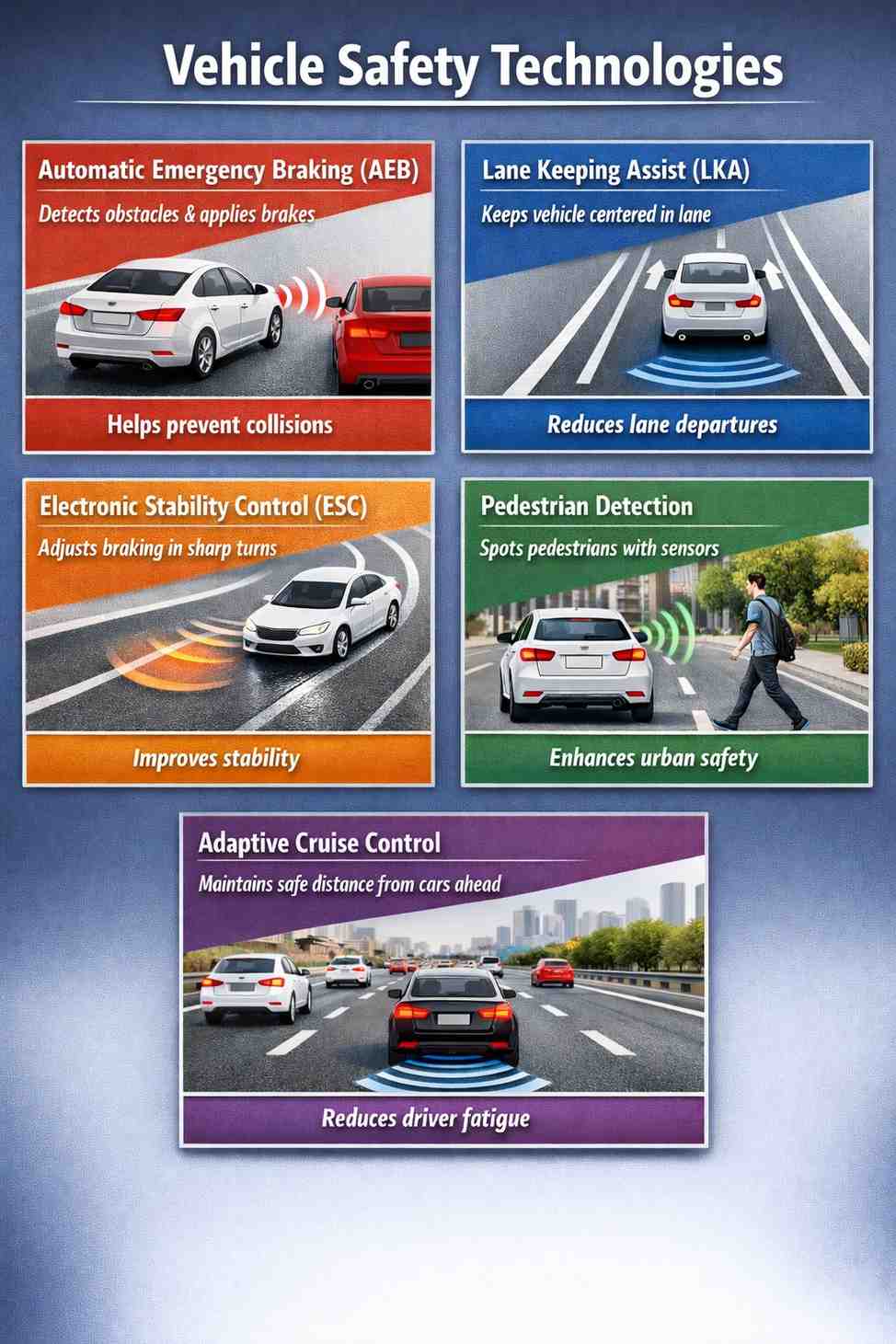
Key Vehicle Safety Technologies
| Safety Feature | How It Works | Driver Benefit |
|---|---|---|
| Automatic Emergency Braking (AEB) | Detects obstacles and applies brakes automatically | Helps prevent collisions |
| Lane Keeping Assist (LKA) | Keeps the vehicle centered within its lane | Reduces lane departure accidents |
| Electronic Stability Control (ESC) | Adjusts braking during sudden turns | Improves vehicle stability |
| Pedestrian Detection | Uses cameras and sensors to identify pedestrians | Enhances urban safety |
| Adaptive Cruise Control | Maintains a safe distance from vehicles ahead | Reduces driver fatigue |
These technologies are often described by manufacturers as modern car safety features that help drivers avoid accidents and maintain better control in difficult driving situations.
International safety programs such as Euro NCAP have shown that technologies like Automatic Emergency Braking can significantly reduce rear-end collisions.

How Vehicle Prices Could Be Affected
The growing adoption of advanced safety systems may influence vehicle manufacturing costs.
Modern safety technologies rely on components such as:
-
radar sensors
-
forward-facing cameras
-
electronic control units
-
sensor calibration software
These systems add complexity to vehicle production. However, industry competition and large-scale manufacturing often reduce costs as technologies become standard across more models.
Drivers researching the latest car prices in the UAE may notice that many new vehicles now include safety technologies that were once available only in premium segments.
How These Changes Affect Drivers and Car Buyers in the UAE
The increasing focus on safety technology will influence several aspects of car ownership in the UAE.
Safer Vehicles
Modern vehicles increasingly include intelligent systems designed to reduce accidents and assist drivers.
Insurance Considerations
Understanding how car insurance works in the UAE can help drivers determine whether vehicles equipped with advanced safety systems qualify for better coverage options or lower premiums.
Maintenance Awareness
Vehicles equipped with radar sensors and cameras may require specialized calibration after repairs.
Buyer Preferences
Consumers are increasingly prioritizing vehicles that offer advanced safety features.
What UAE Drivers Should Know
If you drive in the UAE, these developments translate into practical changes.
New vehicles will include more safety technology.
Even entry-level models are beginning to offer driver-assistance systems.
Used car values may depend on safety features.
Vehicles equipped with modern safety technologies may retain stronger resale value.
Vehicle inspections remain essential.
Drivers must ensure their vehicles comply with Dubai’s vehicle inspection rules when renewing their registration.
Driver responsibility remains critical.
Technology assists drivers but does not replace attentive and responsible driving.
In simple terms, vehicles are becoming smarter, safer, and more technologically advanced.
Impact on the Used Car Market
The UAE’s used car market may gradually shift as safety technologies become more widespread.
Possible Market Trends
| Market Factor | Expected Trend |
|---|---|
| Vehicles with advanced safety features | Higher resale value |
| Older vehicles without safety systems | Faster depreciation |
| Buyer demand | Increasing preference for safer vehicles |
Drivers researching how to buy a used car in the UAE are increasingly considering safety features before making a purchase.
Many modern models from manufacturers such as Toyota, Hyundai, and Nissan already include advanced driver-assistance technologies.

Why the UAE Is Strengthening Vehicle Safety
Road safety remains a national priority.
Authorities continue implementing initiatives aimed at:
-
reducing traffic accidents
-
protecting pedestrians and cyclists
-
improving driver awareness
-
supporting smart transportation systems
Organizations such as Dubai Police regularly conduct road-safety campaigns designed to promote responsible driving.
Tips for Car Owners Before 2026
Drivers can prepare for evolving vehicle safety standards with a few practical steps.
Practical preparation tips
-
Choose vehicles equipped with modern safety technologies
-
Maintain your car regularly to pass inspection tests
-
Compare insurance plans carefully
-
Stay informed about vehicle regulations
Following car maintenance tips for UAE drivers can also help keep vehicles roadworthy and reduce the risk of failing inspections.
Frequently Asked Questions (FAQs)
Will older cars be banned in the UAE after 2026?
No. Older vehicles are not banned, but they must pass roadworthiness inspections at registration renewal.
Will insurance premiums decrease for safer vehicles?
Some insurance providers may offer discounts for vehicles equipped with advanced safety systems.
Are safety features mandatory in all vehicles?
Many safety technologies are encouraged and are increasingly common, although requirements vary by vehicle category.
Do regulations apply to imported used vehicles?
Yes. Imported vehicles must meet UAE registration and inspection requirements before they can be legally driven.
Final Thoughts
The UAE car safety regulations in 2026 highlight the country’s commitment to building safer roads and smarter transportation systems.
As vehicles become more technologically advanced, drivers will benefit from improved safety features, better accident-prevention systems, and stronger regulatory oversight.
For car owners and buyers in the UAE, one thing is clear: vehicle safety technology is rapidly becoming the new standard across the automotive industry.
For more automotive news, buying guides and expert insights, explore the latest updates on the ArabWheels blogs.