
No Roof Camera? How Your Car Shows a Bird’s-Eye View
A simple guide to how your car creates a bird’s-eye view without a roof camera, using small cameras, software correction and image stitching.

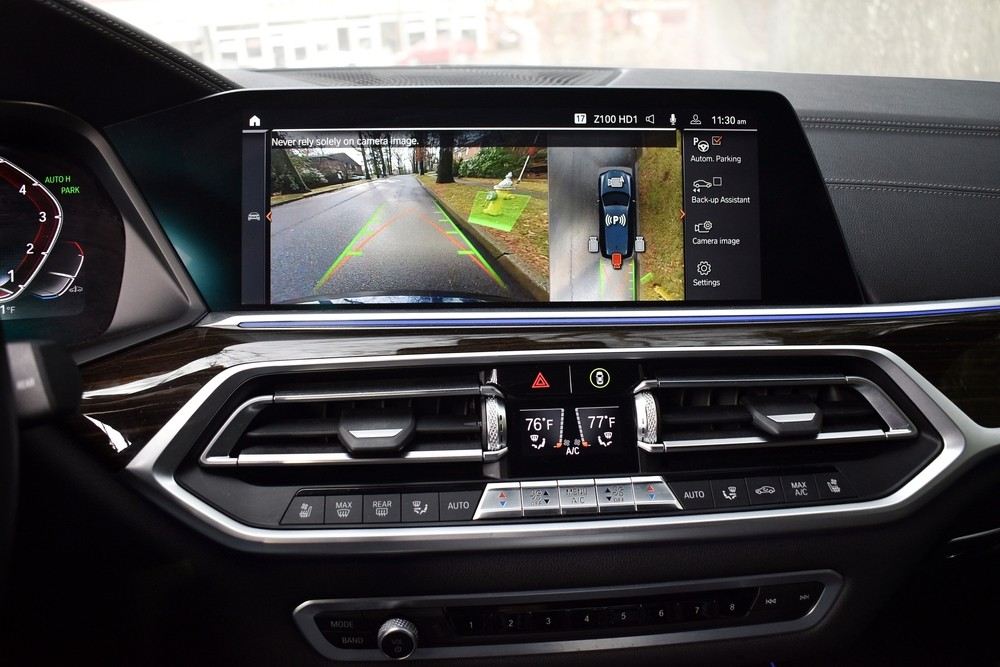
A modern bird’s-eye view camera can make parking look strangely simple. On the infotainment screen, the car appears from above, surrounded by parking lines, kerbs, walls, nearby vehicles, and obstacles.
It almost looks as if a drone is hovering above the roof.
In reality, there is no camera above the car. The top-down image is created by combining camera feeds from different parts of the vehicle. The system uses wide-angle cameras, software correction, and real-time processing to turn those separate views into one overhead-looking image.
For UAE drivers, this feature is especially useful in tight mall parking spaces, basement car parks, villa driveways, and crowded urban areas where visibility around the vehicle can be limited.
The Cameras Are Lower Than You Think
Most 360-degree camera systems use four main cameras.
One camera is usually mounted at the front of the car, often near the grille. Another sits at the rear, usually close to the number plate or tailgate. Two more cameras are placed under the side mirrors.
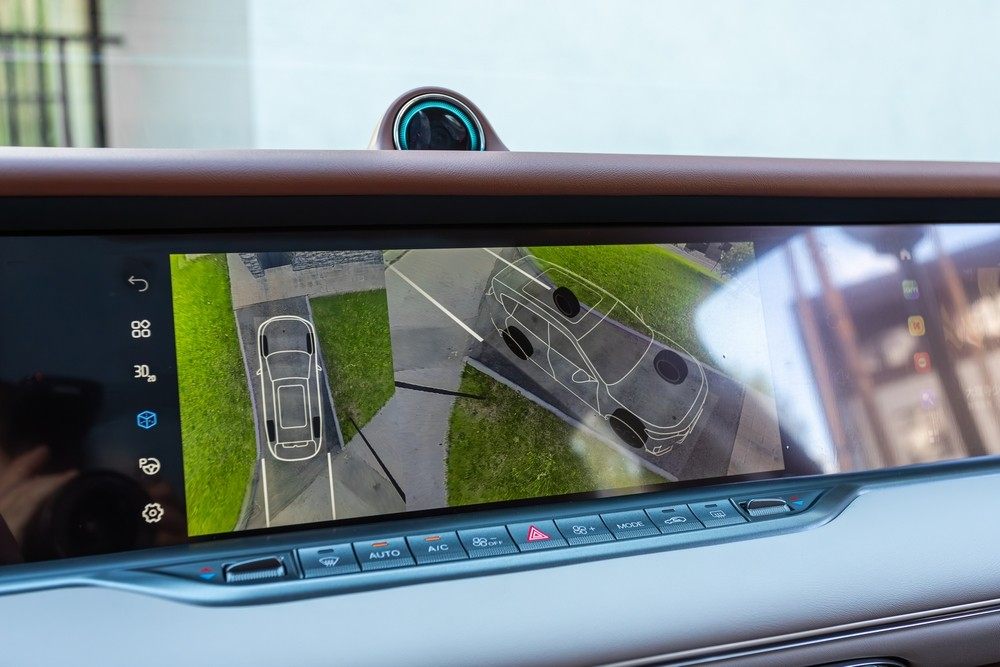 Each camera uses a wide-angle or fisheye-style lens to capture as much of the surrounding area as possible. Individually, these camera feeds look distorted. Together, the camera feeds provide enough visual information to build a wider picture around the vehicle.
Typical camera locations include:
- Front grille or bumper
- Rear tailgate or number plate area
- Left side mirror
- Right side mirror
The system does not simply show four separate camera feeds. Instead, the car’s software combines them into a single view that looks as if it was captured from above.
Read more: UAE road regulations and driving advice and 10 new car technologies in UAE worth paying for in 2026.
How Four Small Cameras Become One Overhead View
The clever part is not just the camera hardware. The real work happens inside the vehicle’s image-processing system.
Each camera sees the road from a different angle. The front camera looks ahead, the rear camera looks behind, and the mirror cameras cover both sides of the vehicle. The software then corrects lens distortion, aligns the camera feeds, and stitches the images together.
Global Toyota describes its Panoramic View Monitor as a system that:
“Displays an overhead view of the vehicle on the navigation system screen.”
That process creates the top-down car view displayed on the screen.
In simple terms, the system does this:
- Captures live video from multiple cameras
- Corrects wide-angle lens distortion
- Uses camera calibration to understand where each camera is mounted
- Projects the images into a shared top-down perspective
- Blends overlapping areas between cameras
- Adds a vehicle graphic in the centre
- Displays parking lines, steering guides or warning zones
This is why a bird’s-eye view camera can feel almost impossible at first glance. The car is not showing one real camera angle. It is building a virtual overhead view from several lower camera angles.
Why the Image Can Look Slightly Odd
A surround-view camera is useful, but it is not perfect.
Because the system is transforming multiple camera feeds into a top-down view, some areas can look stretched, curved, or slightly misaligned. This is most noticeable near the edges of the image, around tall objects, or when another vehicle is very close to the bumper.
The system is also limited by what the cameras can actually see. If an object is above the camera line, hidden behind another object, or outside the camera’s field of view, it may not appear clearly on the screen.
That is why drivers should treat the feature as a parking aid, not a replacement for mirrors, shoulder checks, or direct observation.
Why the Car in the Middle Is Not a Live Roof Shot
The car you see in the middle of the screen is usually not a live camera image of your actual roof. It is a graphic or rendered image placed into the display to help you understand the vehicle’s position.
This centre graphic gives the impression that you are looking directly down at your car. Around it, the stitched camera feeds show the surrounding area.
That combination makes the display easier to understand quickly, especially while parking or manoeuvring at low speed.
Why UAE Drivers Actually Use 360-Degree Cameras
A 360-degree camera system is especially useful in everyday UAE driving because many parking situations involve tight spaces, high kerbs, and limited visibility.
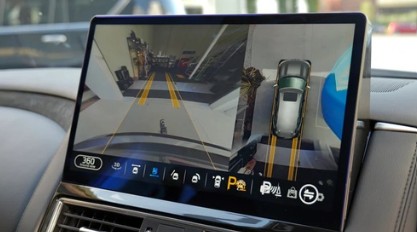
It can help when:
- Parking in narrow mall spaces
- Avoiding kerb damage on alloy wheels
- Manoeuvring in basement parking
- Reversing near pillars or walls
- Entering tight villa driveways
- Checking for low obstacles near the bumper
- Aligning the car within parking lines
The same idea is now visible across many new SUVs, where larger screens and parking-assistance displays have become part of the everyday cabin experience.
View this post on Instagram
For larger SUVs and pickups, the feature can be even more valuable because the driver sits higher and may not see low objects close to the vehicle.
Read more: How the UAE cut traffic deaths by 74% since 2011.
What the Camera Still Cannot See
A bird’s-eye view camera reduces blind spots, but it cannot remove them completely. It improves visibility around the vehicle, although drivers still need to check mirrors, sensors, and their surroundings.
U.S. Department of Transportation NHTSA says camera-based rear visibility research supports safety work on systems designed to:
“designed to replace or supplement vehicle rearview mirrors.”
Drivers should remember:
- Objects can appear closer or farther than they really are
- Tall objects may look distorted
- Camera lenses can be affected by dirt, dust, or rain
- Bright sunlight can reduce image clarity
- Small children, pets, or low objects may still be difficult to see
- The system works best at low speed
In the UAE, dust and heat can also affect camera visibility. A dirty rear camera or side-mirror camera can reduce the quality of the stitched image, so keeping the lenses clean matters.
Dust, water spots, and misaligned cameras can also affect the display. After bumper repairs, mirror replacement, or accident damage, some systems may need camera calibration to keep the stitched view accurate.
Is a 360-Degree Camera Worth Paying For?
For many UAE buyers, yes. A 360-degree camera system is one of the most useful driver-assistance features for daily city driving.
It does not make the car autonomous, and it does not guarantee that every obstacle will be visible. However, it can reduce parking stress and make SUVs and larger vehicles easier to place accurately in tight spaces.
UAE road-safety guidance places responsibility on the driver, even when the car has assistance features.
“Driver-assistance features can help with visibility, but they do not replace careful observation, mirror checks and low-speed control in parking areas.”
Buyers comparing new or used cars should check whether the system includes only a rear camera, a basic 360-degree view, or a more advanced surround-view camera with moving guidelines and selectable angles.
Final Verdict
There is no camera floating above your car. A bird’s-eye view camera combines feeds from several wide-angle cameras mounted around the vehicle.
The software corrects distortion, aligns the views, and stitches them into a top-down image. The result looks like a single overhead camera, but it is actually a live digital reconstruction.
It is one of the most practical car technology features for parking and low-speed manoeuvring. Still, drivers should use it alongside mirrors, sensors and direct observation, especially in busy UAE parking areas.
For more practical car explainers, buying advice, and UAE driving guides, visit the ArabWheels guides and how-to section.
FAQs About Bird’s-Eye View Camera
A bird’s-eye view camera uses several wide-angle cameras mounted around the car. Software corrects distortion, aligns the images and stitches them into a top-down view on the screen.
No. The overhead view is digitally created from front, rear and side camera feeds. The car graphic in the centre is usually a rendered image, not a live roof camera view.
They are closely related. A 360-degree camera system usually provides the camera feeds needed to create the bird’s-eye or top-down view around the vehicle.
No. It helps with visibility, but it still has blind spots and distortion. Drivers should continue checking mirrors, surroundings and parking sensors.
Yes. It is helpful in UAE mall parking, basement car parks, tight villa driveways and crowded city spaces, especially for SUVs and larger vehicles.
For more UAE car technology explainers, parking safety tips, and driver-assistance guides, explore the ArabWheels UAE blog.
