
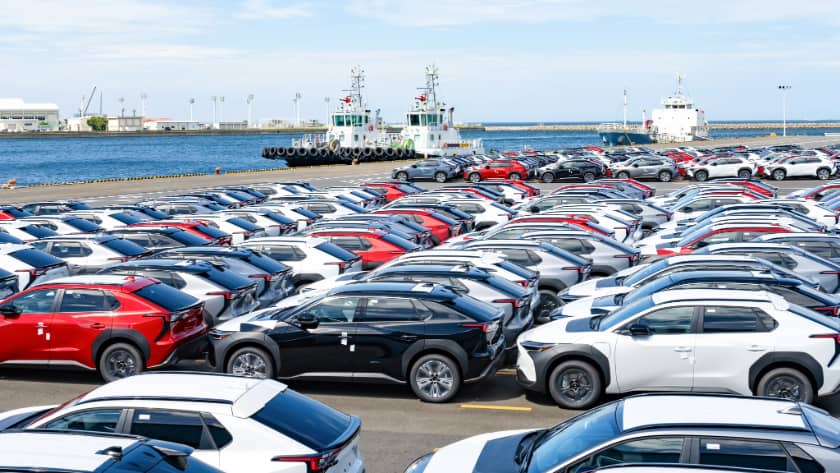
Hormuz Shipping Halt: Why Your Next Car in UAE May Cost 15% More
Rising regional tensions have shifted from political talk to a maritime crisis, directly endangering the main route for UAE vehicle imports. For the UAE automotive sector, the Hormuz Strait is the single most important chokepoint for vehicle imports.
As vessels face 80% traffic drops and insurance cancellations, the question for every UAE car buyer is simple: will the showrooms run dry? This market insight report breaks down the data behind the disruption and its implications for local car supply in 2026.
The Financial Stakes of a Blockaded Strait
The Hormuz Strait remains the UAE’s automotive lifeline. With China exporting over 570,000 vehicles to the Emirates in 2025, any blockage at this chokepoint immediately threatens the nation’s position as a global car hub.
With the strait now effectively closed to several major shipping lines, these billions of dollars in assets are now at risk. According to the China Passenger Car Association, nearly one-sixth of Chinese auto exports are at risk due to this geographic bottleneck. For the UAE specifically, the impact is two-fold: direct supply and transshipment.
Dubai serves as a massive hub for re-exporting vehicles to Africa and North Asia. When the Hormuz passage is restricted, it doesn’t just stop cars from local showrooms; it paralyzes the regional logistics economy.
Recent reports from Caixin Global suggest that many Chinese state-owned automakers have already seen their regional operations stall entirely. This creates a vacuum that could take months to fill, even after a resolution is reached.
Comparative Market Exposure by Country
To understand the scale of the potential shortage, we must examine export data from the leading Asian manufacturing hubs. Each nation has a different level of exposure to the current conflict zones.
| Exporting Nation | 2025 Performance | Exposure to Middle East | 2026 Immediate Risk |
| China | 8.32M Units Total | 1.39M Units to Gulf | Shipments stalled; prices up |
| South Korea | $72B Record Value | $5.3B to Middle East | 6% production dip forecast |
| India | 858k Units (Record) | 25% of total exports | Shipping surcharges >$2,000 |
| Japan (Toyota) | 2M+ Units Total | 320,699 Units (15%) | 40,000 unit production cut |
India’s Maruti Suzuki and Hyundai India are particularly vulnerable, as they treat the Gulf as their primary overseas market. Hyundai India currently ships nearly 40% of its total export volume to West Asia.
Maritime insurers canceling coverage for Gulf vessels forces manufacturers to choose: risk uninsured assets or halt supply.
Why Production is Slowing Down Globally
The crisis is not just about finished cars being stuck on ships. The modern automotive supply chain relies on “just-in-time” manufacturing that is now being tested. Toyota has already signaled a production cut of 40,000 vehicles specifically marked for the Middle East.
This is a proactive measure to prevent a massive backlog of undeliverable inventory. Japan’s Nikkei reports that these logistical concerns are directly tied to the escalating US-Israeli campaign against Iran. Beyond finished units, the UAE’s local assembly and repair sectors are also not doing well financially.
The cost of petrochemical feedstocks used in plastics and rubber is expected to rise by 25%. Since an average car contains 200 kg of plastic, the price of every vehicle will likely climb. Brent crude hitting $101 per barrel further compounds these costs, as freight rates across Asia-Gulf corridors have already spiked by 40% in just 7 days.
Strategic Shifts for UAE Dealerships
To bypass the Hormuz bottleneck, UAE logistics providers are pivoting to overland transit and alternative ports, such as Fujairah, to maintain inventory flow. DP World is currently exploring bonded road transit from the Port of Fujairah to bypass the inner Gulf waters.
While this bypass keeps some stock flowing, the added “war-risk” surcharges are inevitably passed down to the consumer. Buyers should expect a “New Normal” where popular SUV and EV models face waitlists of 3 to 5 months.
- Inventory Trends: Dealerships are prioritizing high-margin luxury vehicles over budget sedans to maximize limited shipping space.
- Pre-Owned Market: A shortage of new-car arrivals is already driving up the value of high-quality used cars in Dubai and Abu Dhabi.
- Price Adjustments: Expect a 10% to 15% increase in “On-The-Road” prices due to logistics and insurance premiums.
Conclusion
So, is the car supply in the UAE truly at risk? The data suggests the UAE can adapt, but the Hormuz disruption will cause a significant “inventory winter” mid-2026. Diversifying shipping routes will help, but the sheer volume of 1.39 million Chinese cars alone cannot be easily rerouted.
Until the geopolitical situation stabilizes, the Gulf automotive market will remain in a state of high-cost, low-supply tension. What do you think about this Shipping Halt? We’d love to hear your thoughts in the comments below.
Keep following the Arabwheels Blog for the latest sharp insights, exclusive UAE updates, and global automotive trends that matter.