
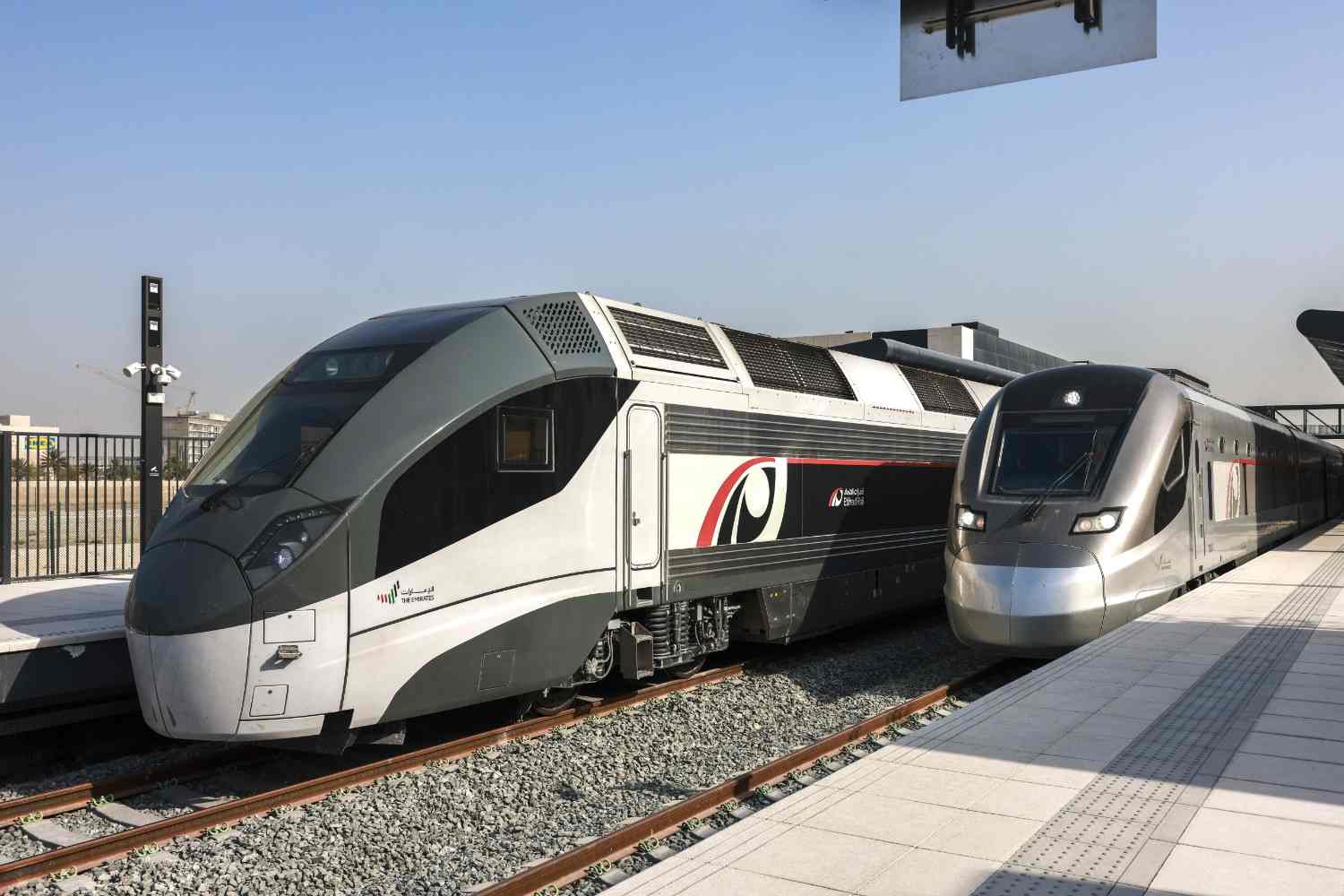
Can Etihad Rail Rival the Dubai–Abu Dhabi Car Commute?
Future rail connections could let commuters, students and air travellers move between Dubai and Abu Dhabi before switching to the Metro for the final leg of their journey.

Many Dubai–Abu Dhabi commuters know this feeling. As Etihad Rail Dubai services move closer to becoming part of everyday travel, the road commute remains familiar: you leave work later than planned, check the navigation app, then watch the estimated arrival time keep slipping.
The distance between the UAE’s two biggest cities has never been the main issue. The uncertainty comes from what happens on the road in between.
That is why the UAE’s expanding rail network matters beyond headline train speeds.
Etihad Rail passenger services, the planned Dubai–Abu Dhabi high-speed railway and Dubai Metro’s expanding network could eventually give travellers something the UAE has never had at this scale: a practical way to move between emirates without relying on a car for every part of the journey.
For commuters, the bigger question is not whether the train can cover Dubai–Abu Dhabi in 30 minutes, but whether the full journey can compete with driving.

The Real Test Starts After You Leave the Train
A fast train between Abu Dhabi and Dubai sounds useful. But it becomes less useful if passengers arrive far from home or work.
This is where Dubai Metro becomes central to the story.
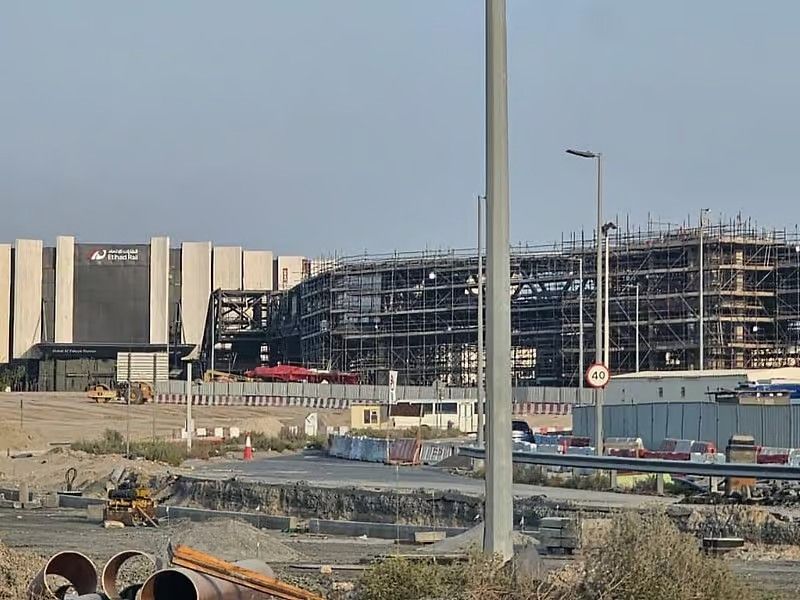
The Etihad Rail passenger service began operating between Abu Dhabi’s Mohamed bin Zayed City Station and Fujairah on 30 June 2026. Etihad Rail plans to add Dubai Station at Jumeirah Golf Estates on 30 September 2026.
ArabWheels has also mapped the wider Etihad Rail passenger station network across the UAE.
The station’s Metro connection makes its location particularly useful for commuters.
Route 2020, the Red Line extension, already serves Jumeirah Golf Estates. From there, passengers can continue towards Dubai Marina, Dubai Internet City, Business Bay and other areas.
The Gold Line should improve those connections further. Plans link it with both Etihad Rail and the existing Metro network.
Dubai’s approved Gold Line will cover 42 kilometres and include 18 stations. RTA plans to open it on 9 September 2032.
The line will connect with the Red Line at Business Bay and Jumeirah Golf Estates. It will also meet the Green Line at Al Ghubaiba. Etihad Rail connections are planned at Meydan and Jumeirah Golf Estates.
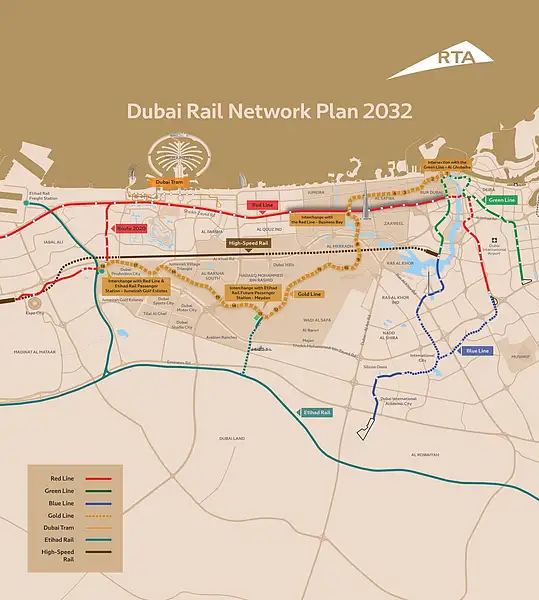
Those interchanges would make the national rail station part of a wider urban transport network rather than an isolated terminus.
The relevant comparison then becomes the full door-to-door journey, not simply the intercity train segment.
For example, an Abu Dhabi commuter working near Business Bay could use intercity rail followed by the Metro once the required services and interchanges are operating.
That is when rail begins to compete with driving on the whole journey, rather than only the intercity leg.
Rail Could Change How Travellers Choose Airports
Rail integration could also change how UAE residents choose airports.
The planned Abu Dhabi–Dubai high-speed railway aims to improve travel between the two cities. It will also connect with other transport networks. Etihad Rail has confirmed the target journey time and maximum speed. However, the company has not yet announced detailed fares or operating schedules.
For air passengers, better rail links could make cross-emirate airport access easier.
Today, travellers choosing between Dubai International Airport, Al Maktoum International Airport and Zayed International Airport must consider more than the flight itself. Driving time, taxi fares and long-term parking can all affect the decision.
Future rail and Metro connections could change that calculation. Their value will depend on station locations, transfer times and how easily passengers can reach each airport.
For travellers who still use public transport, ArabWheels also has a guide to the Abu Dhabi to Dubai bus, including timings, fares and route details.
Some travellers may find flights from a neighbouring emirate more practical if rail cuts the amount of road travel required.
Families carrying several suitcases may still prefer cars or taxis. They offer a clear convenience advantage for door-to-door airport travel.
Rail will not replace those options for every passenger. Instead, it could give travellers another practical way to reach airports across the UAE.
Dubai Metro Is What Makes the Network Work
Dubai is already expanding the urban side of this transport network.
The Metro Blue Line will span 30 kilometres and include 14 stations, with opening scheduled for 9 September 2029. It will serve Dubai Festival City, Dubai Creek Harbour, International City, Dubai Silicon Oasis and Academic City, with connections to the existing Red and Green Lines.
For inter-emirate commuters, the Blue Line will make more Dubai districts accessible without relying on a car for the entire journey. ArabWheels has a separate guide to the Dubai Metro Blue Line project, covering its route and key stations.
The Gold Line is scheduled to follow in 2032 and expand Dubai’s rail network further.
According to RTA projections, the Gold Line could reduce more than 40 million journeys each year. Drivers could benefit even if they never use the Metro.
If more commuters switch from cars to rail, Dubai could see less pressure on some busy roads and interchange areas.
Cars Are Not Going Away, and That Is Fine
These projects do not mean car-dependent travel in the UAE is about to disappear.
Dubai and Abu Dhabi are geographically spread-out cities. Many residential communities, industrial areas and workplaces still make a car significantly more practical, particularly for people making several stops in one day.
Families doing school runs, workers travelling to locations away from rail corridors and residents living some distance from stations will continue to find private cars difficult to replace.
A fast intercity train will only be as useful as the connections that get passengers to the station and from the station to their destination.
Bus connections, taxis, parking, walking links, Metro interchanges and other last-mile transport will therefore matter almost as much as the railway itself.
Rail does not have to replace the car; it has to offer a practical alternative for journeys that suit the network.
The Immediate Change Is More Transport Choice
Etihad Rail entered scheduled passenger operation on 30 June 2026.
Etihad Rail reported on 3 August that more than 70,000 tickets had been sold since passenger bookings opened. Dubai Station is scheduled to follow on 30 September.
The high-speed railway and much of Dubai’s future Metro expansion will take considerably longer.
So tomorrow morning, the Sheikh Zayed Road and E11 commute will still look familiar.
By the early 2030s, commuters are scheduled to have substantially more rail options than they do today.
For decades, living in one emirate and working in another has usually meant accepting the motorway as part of daily life. Passenger rail could offer a realistic alternative for some Dubai–Abu Dhabi journeys.
If the national rail, high-speed rail and Metro networks connect as planned, some commuters will have an alternative to making the entire journey by road.
For motorists, the important change is not the disappearance of the car, but the possibility of not needing it for every inter-emirate journey.
Explore more ArabWheels coverage of Etihad Rail routes and stations, Dubai Metro routes and timings, and Dubai–Abu Dhabi intercity travel
