
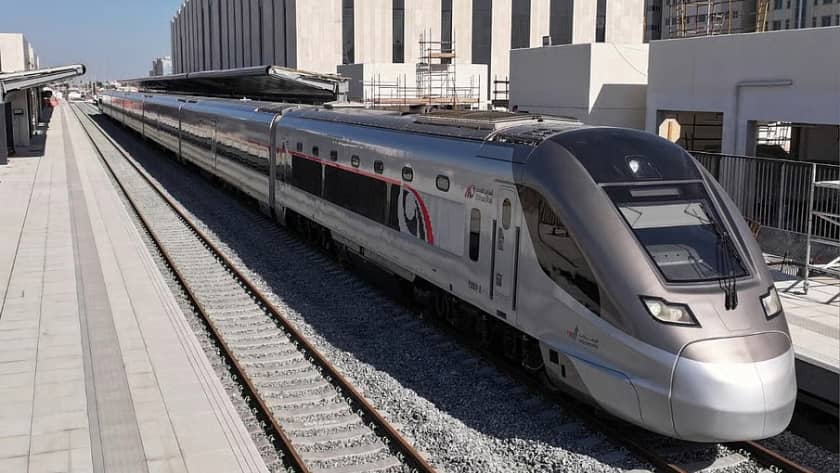
Etihad Rail Passenger Service: 7 New Stations to Open Soon
The UAE’s transport landscape is changing forever, as Etihad Rail’s passenger network will officially connect the entire country. This massive infrastructure project represents a bold vision for a sustainable and highly connected future.
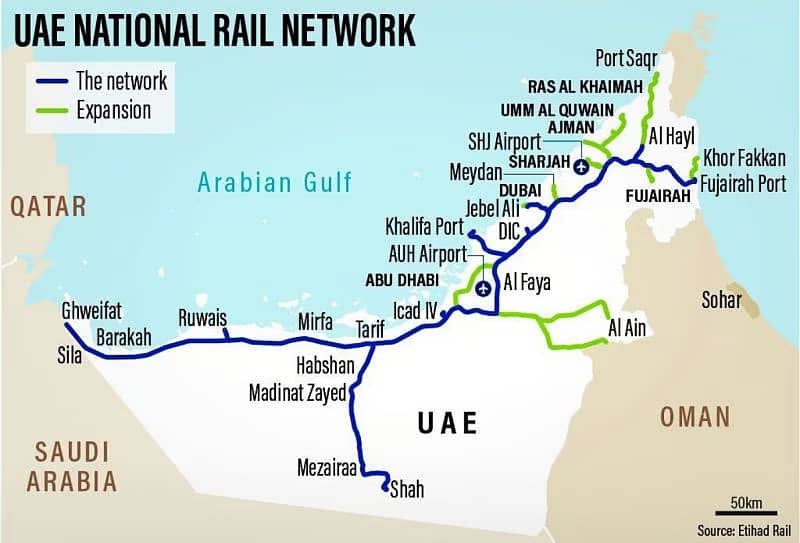
Officials recently announced seven new passenger stations to complete the national map, bringing the total to 11 destinations. These strategic hubs will allow residents to travel between emirates with unprecedented speed and comfort.
New Stations for the Etihad Rail Network
The latest announcement identifies seven key locations that will serve as vital links for the passenger service. These newly revealed stations include Al Sila, Al Dhannah, Al Mirfa, Madinat Zayed, Mezairaa, Al Faya, and Al Dhaid.
They join the previously confirmed major hubs in Abu Dhabi, Dubai, Sharjah, and Fujairah to form a complete network. According to the UAE Ministry of Economy and the rail operator, the service will launch in phases throughout 2026.
The Etihad Rail project has already utilised over 24 million man-hours and thousands of experts to reach this milestone.
- Total passenger stations will reach 11 hubs across all seven emirates.
- The passenger train fleet consists of 13 high-tech trains, with 10 already arrived.
- Each passenger train can carry up to 400 people at speeds of 200 km/h.
- Commute times from Abu Dhabi to Dubai will drop to approximately 57 minutes.
- The network expects to serve over 36 million passengers annually by the year 2030.
Premium Travel Standards and Onboard Features
Passengers can expect a world-class experience while travelling on the Etihad Rail network between different emirates. The trains offer three distinct cabin classes, including first class, business class, and economy class.
Business class compartments will feature 16 luxury seats, while the economy carriages will accommodate 56 passengers. Modern amenities such as full Wi-Fi connectivity and power outlets at every seat are standard.
The joint venture with global operator Keolis ensures that the service meets international safety and efficiency standards. This partnership will manage train operations and integrate other transport modes, such as buses and taxis, for passengers. The Etihad Rail fleet uses advanced technology to maintain reliability even in the harsh desert climate.
Travel Time Comparison: Etihad Rail vs. Road
This table highlights the “time back” advantage for passengers, contrasting the fixed rail schedule against variable road traffic.
| Route | Etihad Rail Time | Car / Bus (Est. Time) | Time Saved |
| Abu Dhabi ↔ Dubai | 57 mins (30 mins high-speed*) | 90 – 120 mins | ~33 – 60+ mins |
| Abu Dhabi ↔ Fujairah | 105 mins | 150 – 165 mins | ~45 – 60 mins |
| Abu Dhabi ↔ Al Ruwais | 70 mins | 140 – 150 mins | ~70 – 80 mins |
| Abu Dhabi ↔ Sohar (Oman) | 100 mins | 210 – 240 mins | ~110 – 140 mins |
| Al Ain ↔ Sohar (Oman) | 47 mins | 90 – 100 mins | ~43 – 53 mins |
Conclusion
The completion of the national passenger map marks a historic achievement for the Etihad Rail project. This new transport era will boost domestic tourism and strengthen social ties across the emirates. We want to know which city you are most excited to visit using the new train service.
Share your thoughts on this major development in the comments below. Keep following the Arabwheels Blog for more content like this.