


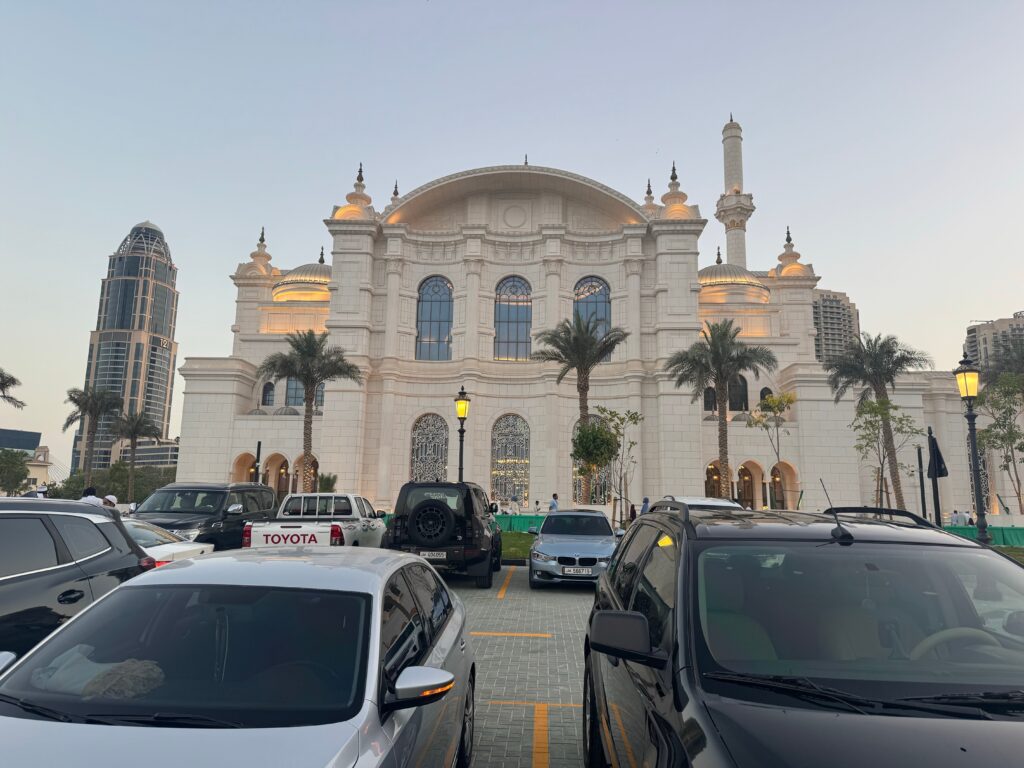
Starting in August, Mosque-goers across Dubai will notice a major change. A new Mosque parking policy will take effect. Parking at Mosques will now be paid 24 hours a day, every day of the week. However, there’s an important exception—parking will still be free during official prayer times.
This new rule comes as part of the city’s push to improve parking availability and fairness in high-demand areas.
What’s Changing and Why?
Under the new Mosque parking policy, all vehicles must pay for parking at Mosque lots outside prayer hours. This means that even early morning or late-night visitors must pay unless it’s during a prayer time. The RTA says this move will reduce parking misuse around religious sites.
Some Mosque parking zones have faced overcrowding due to people parking for non-prayer activities. This new rule aims to make spaces more accessible for actual worshippers during prayer times.
When Is Parking Still Free?
Free parking will still be available, but only during the designated prayer periods. This includes the five daily prayers—Fajr, Dhuhr, Asr, Maghrib, and Isha. The grace period starts a few minutes before prayer and ends shortly afterward.
Clear signage will be displayed at each Mosque showing the exact free times each day. This ensures worshippers can attend prayers without worrying about parking fees. Friday prayers, which draw large crowds, will also remain covered under the free-parking period.
How Will It Be Monitored?
The RTA will update smart meters and signs to reflect the Mosque parking policy. Digital parking meters will automatically apply grace periods during prayers. Outside of those windows, regular parking fees will apply just like any other public spot.
Parking inspectors will monitor Mosque zones to ensure compliance, especially during peak hours. The policy is being rolled out with awareness campaigns so that residents understand when fees apply.
Community Response
Many Dubai residents have welcomed the balance offered by the new rule. “It keeps parking fair,” said Farid, a long-time resident of Al Nahda. “Now, worshippers get access during prayers, and others won’t abuse the space,” he added.
Still, some drivers feel it adds pressure for late-night Mosque visitors. But most agree that organized rules create smoother experiences for everyone. The RTA has promised to review feedback and adjust the policy if needed. They’re also exploring options to add more prayer-only parking zones in crowded areas.
Conclusion
Dubai’s new Mosque parking policy brings a fair balance—paid 24/7, but still free during prayer times. It helps protect worshipper access while reducing parking misuse in busy neighborhoods. Have you parked near a Mosque lately? What do you think of this change? Share your thoughts below.
For more traffic updates, car tips, and rule changes in the UAE, follow the Arabwheels Blog.