
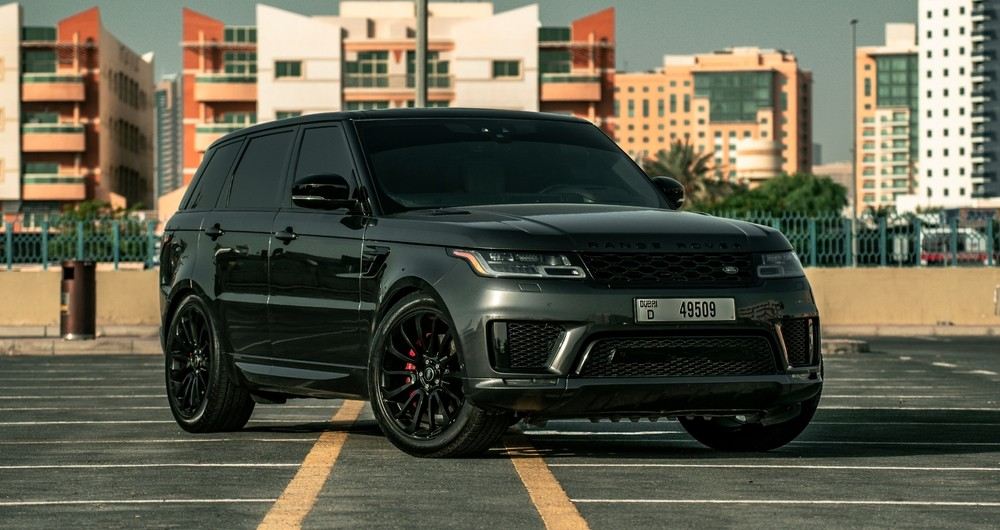
Do UAE Drivers Really Need 400+ HP Family SUVs?
Why UAE buyers should look beyond horsepower and compare comfort, range, running costs and everyday usability.

Five hundred horsepower used to sound like sports-car territory, but 400 HP family SUVs are now becoming increasingly common in the UAE, including plug-in hybrids designed to carry children, groceries and luggage.
That shift raises a more useful question for buyers comparing powerful family SUVs in the UAE: does a household really need huge output for school runs and Dubai traffic, or would better cooling, comfort, fuel efficiency, tyre costs and usable hybrid range matter more?
The answer depends less on the brochure number and more on how the SUV will actually be used.
When 500 HP Becomes a Family-Car Number
The clearest example comes from newer Chinese plug-in hybrids.
The UAE-spec GAC GS7 PHEV claims 501 hp, while the Jaecoo J8 SHS reaches 600 hp and 915 Nm. Both accelerate from 0–100 km/h in a claimed 5.8 seconds despite the substantial difference in output.
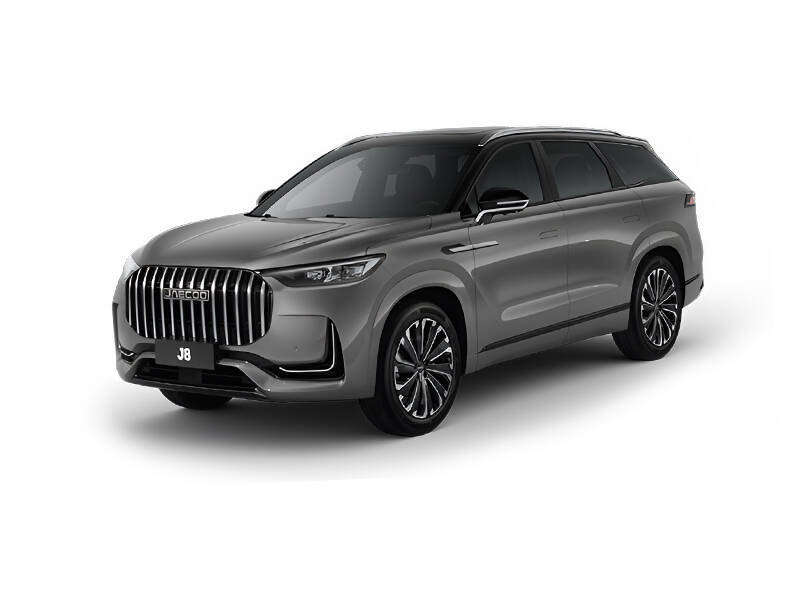
That alone tells buyers something important: more horsepower does not always produce a noticeably quicker family SUV.
These models also show how electrification has changed the market. Combining a petrol engine with powerful electric motors makes high system outputs easier to achieve without relying on a large V8.
The result is that 400 HP family SUVs no longer belong only to luxury or performance brands.
What Does the Extra Power Actually Give You?
There are genuine benefits.
A powerful SUV can feel more responsive when merging onto a motorway, overtaking, or carrying several passengers with luggage. Electric motors also provide strong low-speed torque, which can make a heavy PHEV feel effortless from a standstill.
Drivers who regularly tow or head into the desert may also value stronger torque.
But daily family driving presents a different set of priorities.
A school run rarely demands 500 hp. Neither does sitting in Sheikh Zayed Road traffic or driving between home, work and the supermarket.
In those situations, ride comfort, quietness, visibility and cabin cooling are likely to affect the driver and passengers far more often.
| Daily Use | Value of 400+ HP |
|---|---|
| School runs | Low |
| Urban commuting | Low |
| Motorway overtaking | Moderate |
| Full passenger and luggage load | Moderate |
| Regular towing | High |
| Frequent desert driving | High |
GS7 vs J8 Shows Why the Bigger Number Is Not Everything
The GS7 and J8 make this debate particularly interesting.
The Jaecoo produces 600 hp against the GAC’s 501 hp, yet both quote the same 5.8-second sprint to 100 km/h.
A buyer comparing them therefore gains little from looking at horsepower alone.
Other differences matter more.
The J8 provides seven seats, while the GS7 is a five-seater. The GS7 comparison also lists heated, ventilated and massaging seats, while both models offer substantial driver-assistance and safety features.
Their quoted electric ranges are also close, at 131 km for the GS7 and 134 km for the J8 in the existing ArabWheels comparison.
A family that regularly charges at home may benefit more from completing routine journeys on electric power than from having the highest output figure in the comparison.
That is the more useful buying question.
UAE Heat Makes Comfort More Important Than a Power Figure
There is another reality manufacturers cannot solve with horsepower: summer.
During hot UAE months, families spend far more time using air conditioning than exploiting full-throttle acceleration.
Effective front and rear climate control, ventilated seats and good cabin insulation can therefore deliver more everyday value than another 50 or 100 hp.
The same applies to ride quality.
Large wheels may improve styling, but tyre profile and suspension tuning can affect comfort over speed humps, expansion joints and rougher surfaces.
When comparing powerful family SUVs, buyers should test the second row, rear AC performance and ride comfort rather than spending the entire test drive checking acceleration.
Bigger Wheels Can Follow Bigger Performance
Running costs also deserve attention.
High-output trims often use larger wheels and wider tyres. Those tyres can cost more to replace than smaller alternatives, although the exact difference varies by brand, size and specification.
The current Patrol is a useful example of why buyers should check the complete specification. ArabWheels’ top-trim comparison notes that the LE Platinum City uses 22-inch wheels and advises buyers to compare replacement tyre costs with smaller-wheel Patrol grades.
Insurance, servicing and fuel or charging costs should also enter the calculation.
A quicker 0–100 km/h time lasts a few seconds. Ownership costs remain for years.
Traditional SUVs Prove 400 HP Is Still Not Essential
This is not only a Chinese-SUV discussion.
The Nissan Patrol range demonstrates how different power levels can serve the same basic family mission.
Its naturally aspirated 3.8-litre V6 produces 316 hp and 386 Nm, while the twin-turbo 3.5-litre V6 delivers 425 hp and 700 Nm. Both remain large, three-row 4WD family SUVs.
A buyer does not lose seating capacity simply by choosing the lower-output engine.
The stronger engine makes more sense for buyers who value effortless performance, heavy-load driving or off-road use. But for normal urban family use, 316 hp already shows that a large SUV does not require 400-plus horsepower simply to function properly.
This is where 400 HP family SUVs move from necessity into preference.
More Power Does Not Automatically Mean Poor Fuel Economy
It would also be misleading to argue that every powerful SUV must consume substantially more fuel.
Engine design, hybrid assistance, gearing, weight, and driving style all matter.
Electrified SUVs demonstrate this especially well. The GS7 combines its claimed 501 hp with a 36.3 kWh battery, while GAC quotes up to 1,020 km of combined CLTC range. That figure should not be treated as guaranteed UAE real-world range, but it illustrates how manufacturers are combining performance with electrification rather than treating them as opposites.
Buyers should therefore compare actual fuel economy and electric range rather than assuming the most powerful vehicle will automatically be the most expensive to run.
UAE Roads Do Not Require Sports-Car Performance
Power can improve acceleration. It does not change the legal road environment.
Dubai’s RTA says speed limits are determined using factors including road design, traffic speeds, surrounding development, pedestrian activity, accident history, and traffic volumes.
That matters because acceleration and usable road speed are different things.
Strong acceleration can help during merging or overtaking. But once a family SUV reaches the permitted speed, having another 150 hp provides little additional everyday benefit.
A buyer who spends most of the week commuting may therefore gain more from adaptive cruise control, comfortable seats and efficient cooling.
Who Should Buy a 400+ HP Family SUV?
Choose the higher-output model if you regularly:
- Tow significant loads
- Drive on sand or demanding terrain
- Travel with a full cabin and luggage
- Value strong acceleration enough to pay for it
- Want the performance experience as part of the purchase
Look beyond horsepower if most journeys involve commuting, school runs and family errands.
In that case, compare seating, rear AC, safety features, ride comfort, electric range, fuel economy, warranty, tyre size and purchase price first.
ArabWheels’ wider family-car guide follows the same principle: matching a vehicle to how the household travels matters more than finding one car that claims to do everything.
Final Verdict: Useful Power or Just a Bigger Number?
UAE families do not automatically need 400, 500 or 600 hp.
The growing number of 400 HP family SUVs proves how quickly hybrid technology has moved performance into ordinary family vehicles. That is impressive, but horsepower should remain one part of the buying decision rather than the reason for it.
Buyers who tow, drive dunes or regularly carry heavy loads can make good use of the extra output.
Most urban families will feel the benefits of better cooling, quieter suspension, useful electric range, comfortable seats and manageable running costs far more often.
The smartest family SUV is not necessarily the one with the biggest number on its specification sheet. It is the one whose strengths match the journeys your family actually makes.
FAQs About 400 HP Family SUVs
Most families do not need that much power for commuting, school runs or regular motorway driving. Higher output becomes more useful for towing, heavy loads, desert driving or buyers who simply prioritise performance.
Not necessarily. Plug-in hybrids can use electric power for shorter journeys if owners charge them regularly. Actual running costs depend on fuel use, charging habits, tyre size, insurance, servicing and driving style.
Its main advantage is stronger acceleration rather than higher usable road speed. In normal traffic, cooling, comfort, visibility and driver-assistance features are likely to matter more frequently.
Only if the additional performance or associated features match your needs. Compare price, seating, comfort, safety, fuel economy, electric range, warranty and ownership costs before paying more for horsepower alone.
Stay ahead by reading ArabWheels blogs on UAE and international automotive news, comparisons, and buying advice. Follow ArabWheels for fresh updates, and if you are considering 400 HP family SUVs, compare how the complete vehicle fits your everyday driving rather than judging it on power alone.
