
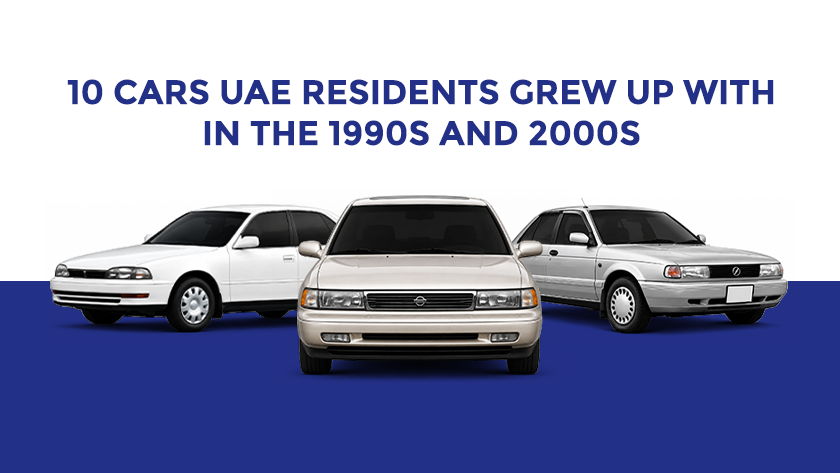
10 Cars UAE Residents Grew Up With in the 1990s and 2000s
From Pajeros and Patrols to Corollas and Maximas, these cars shaped everyday UAE motoring through the 1990s and 2000s.

Long before touchscreen dashboards, connected cars and electric SUVs became normal sights, many of the old cars UAE residents grew up with gave the country’s roads a very different character.
Apartment car parks were filled with Corollas, Sunnys and Camrys. Families headed out in Pajeros, Patrols and Land Cruisers. Meanwhile, cars such as the Nissan Maxima and Honda Accord gave younger drivers something a little more exciting to talk about.
These were not necessarily exotic or expensive cars. Most became memorable because they were everywhere.
For anyone who grew up in Dubai, Abu Dhabi, Sharjah, or elsewhere in the Emirates during the 1990s and 2000s, these nostalgic cars in the UAE can bring back an entire era of motoring.
10 Cars That Defined UAE Roads in the 1990s and 2000s
1. Mitsubishi Pajero
Few cars fit UAE nostalgia as naturally as the Mitsubishi Pajero.
The second-generation Pajero arrived in 1991 with a redesigned body and a broader focus on passenger comfort as well as off-road ability. One of its key additions was Mitsubishi’s Super Select 4WD system, which allowed drivers to switch between rear-wheel drive and four-wheel drive while moving under suitable conditions.
Low-range gearing and a lockable centre differential also gave the Pajero genuine off-road capability.
Early engine choices included a 3.0-litre V6 petrol engine and a 2.5-litre turbo-diesel, while 3.5-litre V6 and 2.8-litre turbo-diesel options joined the range later.
Late second-generation models also gained the wide-fender styling that became especially familiar across the Gulf, along with revised exterior details that gave the Pajero a tougher appearance.
Its combination of family practicality, proper 4WD hardware and everyday comfort suited life in the UAE particularly well. A Pajero could handle school runs and inter-emirate journeys during the week before heading into the desert at the weekend.
Even today, a two-tone Pajero from this era looks instantly familiar on UAE roads.
2. Nissan Patrol
The Nissan Patrol was much more than another large SUV.
The Y61 generation arrived in 1997 with the rugged chassis layout expected of a Patrol, including coil-sprung front and rear axles. Nissan also focused on improving passenger comfort and refinement compared with earlier versions.
Petrol and diesel engines were offered across different markets, including large six-cylinder petrol units that became closely associated with the model in the Gulf.
The 4.8-litre TB48DE inline-six later became one of the Y61’s defining engines in the region. Its large displacement, naturally aspirated power delivery and tuning potential helped make it especially popular among enthusiasts.
Three-door and five-door versions gave buyers different levels of practicality, while the Patrol’s traditional off-road hardware made it suitable for everything from family journeys to serious desert driving.
For many UAE residents, the Y61 became part of desert camps, long road trips, and modified 4×4 culture.
3. Toyota Land Cruiser

If the Patrol represented one side of UAE 4×4 culture, the Toyota Land Cruiser represented the other.
The 80 Series launched in 1989 and became one of the defining Land Cruisers of the 1990s. It combined solid axles and coil-spring suspension with a more comfortable, family-friendly cabin than earlier generations.
Engine choices varied by market and included petrol and diesel six-cylinder units, with the 4.5-litre 1FZ-FE petrol inline-six becoming one of the best-known engines from the era.
In 1998, the 100 Series replaced the 80 Series and moved the Land Cruiser further towards comfort and luxury. It introduced independent front suspension on many versions and added a 4.7-litre V8 to the range, while six-cylinder petrol engines continued in selected markets.
That blend of durability, long-distance comfort and off-road ability made the Land Cruiser especially well suited to UAE life.
It could work as a family car, highway cruiser and desert vehicle without fundamentally changing its character.
Clean 80 Series and early 100 Series examples still have a strong connection with UAE roads of the 1990s and 2000s.
4. Toyota Corolla
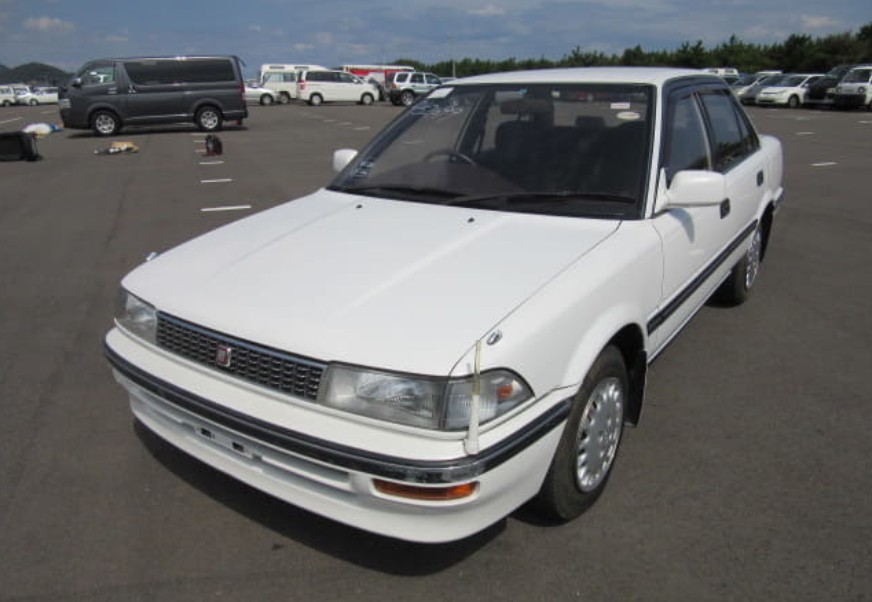
Not every memorable UAE car had four-wheel drive. The Toyota Corolla represented the everyday side of 1990s motoring.
The E90 generation arrived in 1987 as front-wheel drive became the mainstream Corolla layout. Depending on the market, buyers could choose from several small four-cylinder petrol engines.
It was followed by the E100 in 1991. The newer model grew in size and refinement, with a 2,465 mm wheelbase and a more rounded design that reflected the changing compact-car market of the early 1990s.
The Corolla was gradually becoming more than just basic transport. It offered the compact dimensions and straightforward mechanicals buyers expected while providing more space and comfort for families and commuters.
That formula worked particularly well in the UAE, where Corollas became common sights on school runs, work commutes and inter-emirate journeys.
Among the 1990s cars Dubai residents remember most clearly, an older white or beige Corolla remains one of the strongest symbols of everyday motoring from the period.
5. Nissan Sunny
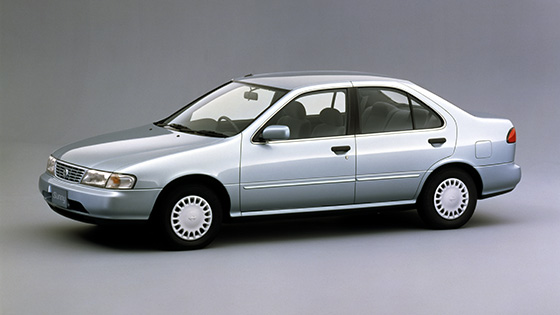
The Nissan Sunny occupied a similar place in UAE life: simple, affordable and built around everyday use.
The B13 generation arrived in 1990 and became one of the best-known Sunny shapes of the decade. Depending on the market, it was offered with small four-cylinder petrol engines, while its front-wheel-drive layout kept the mechanical package relatively straightforward.
The B14 followed in the mid-1990s, bringing a rounder body and a more contemporary cabin while keeping the Sunny’s familiar compact-sedan formula.
By the end of the decade, the Sunny had become more refined without abandoning the qualities that made it attractive as basic everyday transport.
That suited UAE buyers looking for a practical sedan for family use, commuting and fleet duties.
Older Sunnys remain closely associated with the ordinary, everyday side of UAE motoring in the 1990s and early 2000s.
6. Toyota Camry

The Toyota Camry became a familiar family and fleet sedan on UAE roads throughout the 1990s and 2000s.
The XV10 generation arrived in 1991 as a larger Camry developed primarily for international markets. It measured around 4,780 mm in length with a 2,620 mm wheelbase.
Depending on the market, engine choices included a 2.2-litre four-cylinder petrol engine and a 3.0-litre V6.
The XV20 followed in 1996, retaining four-cylinder and V6 options while increasing the wheelbase to around 2,670 mm. The extra size contributed to greater cabin space and reinforced the Camry’s position as a comfortable midsize sedan.
That positioning suited the UAE well. The Camry offered more space and highway comfort than smaller compact sedans without moving into luxury-car territory.
For many residents, the rounded shape of a 1990s Camry remains one of the clearest reminders of everyday UAE motoring from the period.
7. Nissan Maxima

The Nissan Maxima brought a different personality to UAE family-sedan culture.
In export markets, the A32 generation arrived in the mid-1990s with Nissan’s 3.0-litre VQ30DE V6. Depending on specification, the engine produced around 190 hp and was paired with either manual or automatic transmissions.
The following generation continued the V6 formula while adding more cabin space and refinement.
Later versions offered more power in some markets, giving the Maxima stronger straight-line performance than many four-cylinder family sedans of the same era.
In the UAE, that combination gave the Maxima an appeal beyond straightforward family transport. It remained practical and spacious, but its smooth V6 and stronger performance gave it more character than many conventional commuter sedans.
For younger drivers in the late 1990s and early 2000s, the Maxima became one of the more desirable Japanese sedans seen on local roads.
8. Honda Accord
The Honda Accord was another familiar Japanese name on UAE roads.
The fourth-generation Accord arrived in 1989 with a larger body and four-wheel double-wishbone suspension. Depending on the market, it was offered with several four-cylinder petrol engines and both manual and automatic transmissions.
The fifth generation followed in 1993, bringing a wider cabin, smoother styling and greater refinement. Some markets also received V6 versions, although four-cylinder engines remained central to the Accord range.
Its roomy cabin and road-focused chassis made the Accord an obvious alternative to the other Japanese family sedans of the period.
It offered useful everyday comfort and space without moving into the luxury segment, helping it appeal to families and professionals.
A clean 1990s Accord still looks closely tied to the era when Japanese sedans were a major part of everyday motoring in the Emirates.
9. Mitsubishi Lancer

The Mitsubishi Lancer represented the more affordable side of Japanese motoring in the UAE, but the name also carried serious performance credibility.
Most mainstream Lancers were compact family and commuter cars, while performance variants gave the badge a very different reputation.
In 1992, Mitsubishi introduced the first Lancer Evolution. It used a 2.0-litre turbocharged 4G63 engine and a full-time four-wheel-drive system developed from technology used in the Galant VR-4.
The first Evolution produced around 250 PS, with later versions becoming progressively more powerful.
Mitsubishi’s rally success also gave the ordinary Lancer a performance association it would not otherwise have had. The manufacturer won four consecutive World Rally Championship drivers’ titles from 1996 to 1999.
In the UAE, standard Lancers served as everyday transport, while modified examples also became visible within the Japanese-car scene.
That link between ordinary commuting and rally-inspired performance helped make the Lancer one of the memorable Japanese names of the period.
10. Toyota Prado
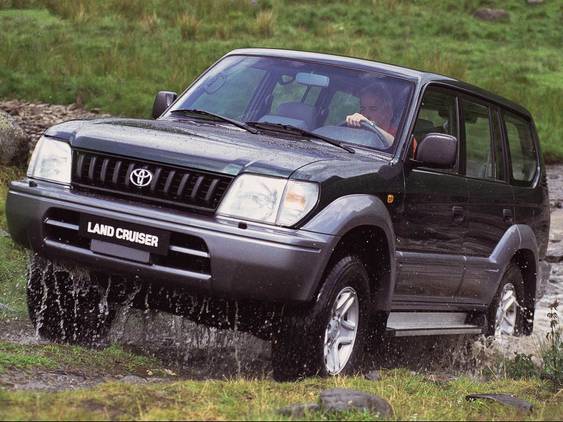
The Toyota Land Cruiser Prado became another familiar part of UAE family life during the 1990s and 2000s.
The 90 Series arrived in 1996 with a body-on-frame chassis and independent front suspension, giving it a more road-friendly character than the full-size Land Cruiser.
Depending on the market, engine choices included a 3.4-litre V6 petrol engine, a 2.7-litre four-cylinder petrol engine and several diesel options.
The 120 Series followed in 2002 with a larger body, a new frame and updated chassis technology while retaining the four-wheel-drive capability expected of the Prado name.
That balance suited the UAE particularly well.
The Prado was easier to manage in cities than a full-size Land Cruiser while still offering the ground clearance and four-wheel-drive hardware needed for camping trips, desert outings and rough-road driving.
For many families, it became a practical one-car solution for weekday school runs and weekend trips outside the city.
Why Were Japanese Cars So Common in the UAE?
One pattern is hard to miss on this list: Japanese manufacturers dominate it.
Reliability, parts availability, servicing costs and resale value have long helped Japanese cars maintain a strong position in the UAE market. ArabWheels has explored this in more detail in its comparison of Chinese vs Japanese cars in the UAE, which looks at reliability, depreciation, service support and ownership costs.
The country’s climate and driving conditions also placed a premium on dependable air conditioning, straightforward maintenance and vehicles capable of handling long highway journeys.
Later used-car data suggests that the preference persisted.
In 2013, data supplied by SellAnyCar.com ranked the 2008 Nissan Altima, Honda Civic and Toyota Camry as the three most popular models among the UAE second-hand buyers it analysed.
SUVs such as the Patrol and Land Cruiser also developed especially strong associations with local desert driving, camping and family travel. The history of the Nissan Patrol Y61 in the UAE shows how closely the model became tied to desert use, enthusiast culture and the wider Gulf motoring scene.
These cars became memorable not because they were rare, but because they fitted naturally into everyday life.
When UAE Roads Looked Very Different
Looking back at the vehicles residents remember from this period also shows how dramatically the UAE market has changed.
A typical family car from the 1990s might have had a cassette player, manually adjusted seats, simple air conditioning and relatively little driver-assistance technology.
Navigation often meant knowing the route, following road signs or asking someone for directions.
Features now taken for granted, large infotainment screens, connected apps and 360-degree cameras, were still years away from mainstream family cars.
Many vehicles from the period stayed on the road for years because they were mechanically simple and familiar to local workshops. Buyers considering older examples today can also see ArabWheels’ guide to used cars by brand in the UAE for advice on service history, condition, GCC specifications and ownership costs.
Today, buyers in the Emirates can choose from hybrids, electric vehicles, turbocharged crossovers and an increasingly broad range of Chinese brands. ArabWheels’ overview of UAE electric cars covers how electrification is changing the country’s car market.
As models from the 1990s and early 2000s become less common, a clean Sunny B13, older Corolla, Pajero or Y61 Patrol stands out more than it once did.
The Cars Were Ordinary. The Memories Were Not.
The cars people remember most are not always supercars.
Sometimes it is the Pajero your family took into the desert, the Corolla that drove you to school, the Sunny your father used for work, or the Maxima you wanted when you were finally old enough to drive.
That personal connection explains why old cars UAE residents grew up with can still bring back such strong memories.
They reflect a period of rapid growth in the Emirates, when Japanese models were a highly visible part of everyday motoring and dependable air conditioning could matter more than the size of an infotainment screen.
The cars are older now, but the memories around them remain surprisingly immediate.
Stay ahead with ArabWheels blogs for more UAE car-buying guides, comparisons, automotive news and ownership advice. Follow ArabWheels on Google News for the latest updates.
