
Why Solid-State Batteries Are Revolutionizing EVs in the UAE
Longer Range, Faster Charging, and Safer EVs for UAE Roads

Solid-State Batteries EVs in the UAE are transforming how drivers handle range, charging, and safety on Emirates roads. Worried your EV might not make it across the desert without a recharge? Dubai’s summer heat could also damage your battery. Fortunately, these concerns may soon be a thing of the past due to solid-state batteries. Offering longer ranges, faster charging, and improved safety, they’re set to revolutionize electric driving across the Emirates.
Electric vehicles are gaining popularity in the UAE. Cities like Dubai and Abu Dhabi are introducing incentives, expanding charging networks, and promoting green initiatives. However, limited range, slow charging, and safety concerns still make some drivers hesitant.
This is where solid-state batteries shine. Combining higher energy density with safer, longer-lasting designs, they suit UAE roads, highways, and hot climate conditions perfectly. In this guide, we’ll explain how they work, highlight which automakers are leading the race, and provide practical advice for UAE drivers planning their next EV purchase.
What You’ll Learn Here
-
The difference between solid-state and traditional lithium-ion batteries
-
How next-gen batteries improve range, charging speed, and safety in the UAE
-
Global automakers racing to launch solid-state EVs
-
Practical tips for UAE EV buyers
-
Common misconceptions to avoid
-
A checklist for planning your next EV
How Solid-State Batteries Work in the UAE
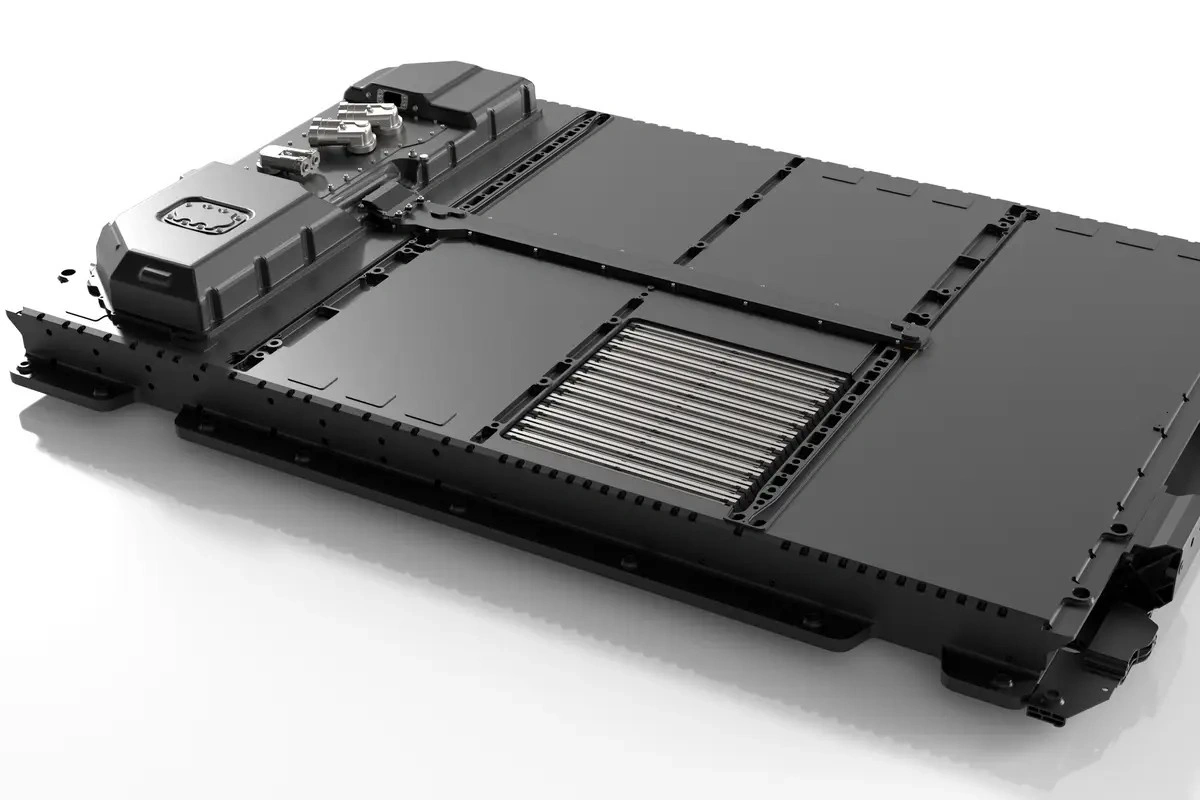
Unlike traditional lithium-ion batteries, solid-state batteries replace the liquid electrolyte with a solid material, making them safer, more durable, and longer-lasting.
Key advantages for UAE drivers:
-
Extended range: Travel farther on a single charge, perfect for inter-emirate trips.
-
Faster charging: Spend less time at charging stations in Dubai, Abu Dhabi, or Masdar.
-
Enhanced safety: Reduced risk of leaks, overheating, or fire, even in the UAE heat.
-
Longer lifespan: Handles 2,000–5,000 charge cycles, almost double conventional batteries.
Quick Comparison: Solid-State vs Lithium-Ion
| Feature | Lithium-Ion | Solid-State |
|---|---|---|
| Electrolyte Type | Liquid | Solid |
| Energy Density | Moderate | High |
| Charging Speed | Standard | Faster |
| Safety | Moderate risk | Safer |
| Lifespan | 1,000–2,000 cycles | 2,000–5,000 cycles |
Pro tip: UAE drivers benefit from higher energy density and faster charging, especially for long intercity trips or busy city commutes.
Who’s Building the EVs of Tomorrow?
Several global automakers are racing to launch solid-state EVs. In the UAE, availability will depend on regional approvals, with mainstream models expected between 2027 and 2030.
-
Toyota: Mass production expected 2027–2028. Prototype EVs can charge 10%-80% in just 10 minutes, offering a range of 998 km. GCC-certified models will likely appear in Dubai showrooms.
-
BMW and Samsung SDI: Developing i7 sedans with Solid Power. UAE releases post-certification.
-
Honda: Targeting 998 km range EVs; GCC rollout may be delayed.
-
Mercedes-Benz and Factorial Energy: Prototype EQS sedan reached 1,204 km; UAE launch will follow certification.
-
Nissan: Hybrid and EV integration planned by 2028, with GCC availability around the same time.
-
Volkswagen & QuantumScape: Testing electric motorcycles with 10%-80% charge in 12 minutes.
-
Stellantis & Factorial Energy: Prototype Dodge Charger Daytona EV fleet charges 15%-90% in 18 minutes.
-
Chinese EV Makers (NIO, IM Motors): Models with approximately 965 km of range could arrive in the UAE only after passing GCC regulatory approval.
Global insight: Mainstream production is expected between 2027 and 2030, giving UAE buyers time to plan and compare options.
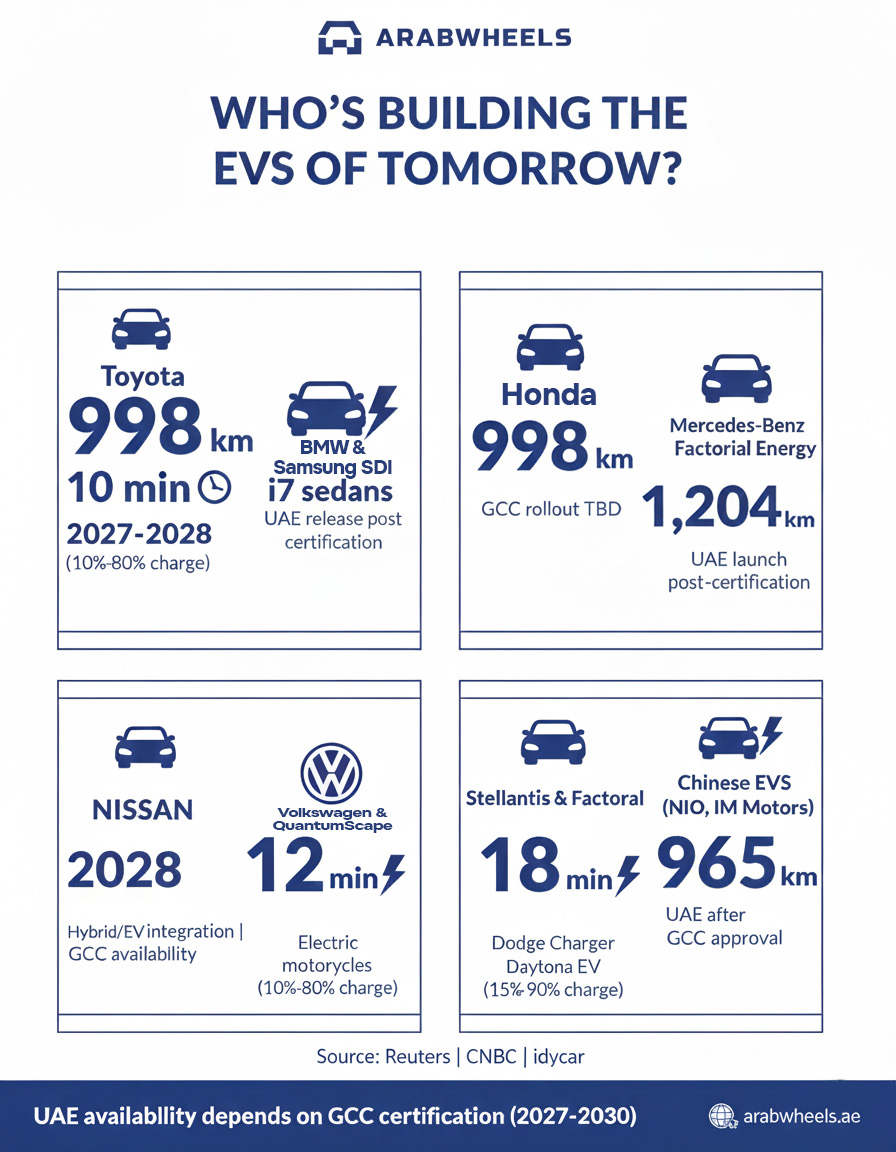
Note: Range and charging times are based on global prototypes and manufacturer claims. UAE availability will depend on regional approvals.
Which Electric Cars with Solid-State Batteries Can You Buy in the UAE?
Currently, most solid-state EVs are prototypes or limited releases.
-
Chinese imports: NIO and IM Motors models with 965 km of range may arrive after GCC certification.
-
Toyota, Mercedes-Benz, BMW: GCC-certified models expected between 2027 and 2030
Tip: Track certified releases and imports to stay ahead of the market.
How Solid-State Batteries Boost EV Performance
-
More extended range: Reduce range anxiety on city commutes and inter-emirate trips.
-
Faster charging: Reach 10%-80% in 10–15 minutes.
-
Safer driving: Lower risk of overheating, leaks, or fire in hot climates.
-
Longer lifespan: Up to 5,000 charge cycles, nearly double that of traditional batteries.
Pricing of EVs with Solid-State Batteries
-
Early adopters: AED 350,000–AED 700,000 depending on brand and features.
-
Future mainstream models: Prices expected to drop after 2027 as production scales up.
Tip: Prototype and limited-edition models cost more; mass-market versions will be more affordable post-2027.
Your Next UAE EV: What Solid-State Batteries Bring
-
Availability: GCC-certified models expected 2027–2030.
-
Range & Charging: Longer trips, fewer stops, fast charging across Dubai and Abu Dhabi.
-
Safety & Reliability: Reduced fire risks, fewer battery replacements, better performance in UAE heat.
Smart Tips for UAE Buyers
-
Track GCC release and certification timelines.
-
Consider early imports cautiously and check RTA compliance.
-
Choose EVs with advanced Battery Management Systems (BMS), which monitor battery health and optimize charging.
-
Keep an eye on EV incentives in Dubai and Abu Dhabi, such as registration fee waivers and home charger rebates.
Quick Checklist for Smarter UAE EV Decisions
-
Verify production and GCC launch timelines.
-
Compare range and charging speeds under UAE conditions.
-
Review incentives from RTA Dubai and Abu Dhabi.
-
Check battery safety features, warranty, and BMS tech.
FAQs About Solid-State Batteries EVs in the UAE
Q: How long will the batteries last?
A: 2,000–5,000 charge cycles, almost double that of lithium-ion.
Q: Are they safe for UAE conditions?
A: Yes, solid electrolytes reduce fire and leakage risks and perform better in heat.
Q: Which automakers will launch UAE solid-state EVs first?
A: Chinese brands like NIO may arrive after GCC approval; international brands are expected between 2027 and 2030.
Q: Will they be expensive?
A: Initially, yes, but prices are expected to drop as production scales and imports increase.
Conclusion: UAE’s EV Future with Solid-State Batteries
Solid-State Batteries for EVs in the UAE aren’t just an upgrade; they’re safer, longer-lasting, and more efficient. Understanding their benefits and timelines helps UAE drivers make informed purchase decisions.
With government incentives, expanding charging infrastructure, and rising EV adoption, the UAE is poised to lead next-generation electric mobility.
Explore More: Compare models, track next-gen releases, and stay updated on UAE EV news. Visit ArabWheels Blogs today to plan your future EV with confidence.
